Showing posts with label vihuela. Show all posts

Wednesday, December 14, 2011

New Vihuela arrived! | Nova vihuela/viola de mão chegou!

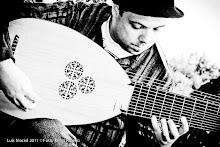
Finally I got my new vihuela. It was built by a French luthier who made me a special price, and therefore asked me not to reveal his name for now. The decorations are inspired by the cover picture of Luys de Milán’s book "El Maestro", 1535.
The woods used in its construction were: spruce, ebony (mirror | back and pegs), Indian rosewood (pegbox), Walnut tree (box), cedar (neck), Pear tree (bridge and rose) and parchment (rose). Strings and frets made of gut.
For me it's a dream to have received this instrument, for which most of my favorite songs of the Renaissance were composed. For those who learned and played them in a 8-orders Hans Frei lute, they seem much easier to play now in this instrument of thinner neck and only 6 orders. (More photos below)

(português)
Finalmente recebi a minha nova vihuela. Foi construída por um luthier francês que me fez um preço de amigo, e por isso, me pediu para não revelar o seu nome por enquanto. As decorações são inspiradas pela gravura de capa do livro “El Maestro” de Luys de Milán, 1535.
As madeiras usadas na sua construção foram: Abeto, ébano (espelho e cravelhas), jacarandá indiano (cravelheira), Nogueira (caixa), cedro (braço), Pereira (cavalete e rosa) e pergaminho (rosa). Cordas e trastes feitos de tripa.
Para mim é um sonho ter recebido este instrumento, para o qual a maioria das minhas músicas preferidas do Renascimento foram concebidas. Para quem as aprendeu e tocou num alaúde Hans Frei de 8 ordens, agora elas parecem bem mais fáceis de tocar neste instrumento de braço mais fino e de somente 6 ordens. (Mais fotos abaixo)

There's a slight curvature in the back/mirror | O espelho é ligeiramente curvado

Pegbox detail | Detalhe das cravelhas

Tuesday, August 9, 2011

vihuela and counterpoint semester | Semestre de vihuela e contraponto

A new semester started, the first one in the technical lute course. The main news is the counterpoint classes. Increasingly, and surely in the next two semesters, the Spanish Renaissance will be central to my study, with the famous songs "Guardame las vacas" by Narváez and "Condes Claros" by Mudarra as the main objects of study.

In the chamber music classes, we’ve started preparing a lute duo project to present at Federal District schools in the future. All duos will be from the Renaissance, including from English, Italian and spanish.

In October, my new Vihuela will arrive, inspired by Luys Milán’s “El Maestro” book cover picture, 1536.

(Português)
Começou um novo semestre, o primeiro no curso técnico de alaúde. A principal novidade são as aulas de contraponto. Cada vez mais, e com certeza durante os dois próximos semestres, o renascimento espanhol será central no meu estudo, com as famosas músicas “Guardame las vacas” de Narváez e “Condes Claros” de Mudarra como principais objetos de estudo.

Nas aulas de Música de Câmara, iniciamos a preparação de um projeto de duo de alaúdes para apresentar futuramente em Escolas do Distrito Federal. Todos os duos serão renascentistas, compreendendo desde a Inglaterra, á Itália e Espanha.

Em outubro, chegará a minha nova Vihuela, inspirada pela gravura de capa do livro “El Maestro” de Luys de Milán de 1536.

Tuesday, August 17, 2010

Spanish Golden Century Semester | Semestre do Século de Ouro Espanhol

A new semester has started. At the end of last semester, I've decided to leave my favourite John Dowland in the drawer and prepare a repertoire based on the spanish XVIth century vihuelists, with music that despite not being an increase in technical difficulty, will make a huge influence in my musicality, rhytmic sense and the way I play, without fear of playing slowly when it should be played slowly.
The soundtrack of these vacations was the album "Music for Vihuela" by Dolores Costoyas, which is having a huge impact in me, and Don Quixote's adventure, put to music by the Jordi Savall's divine music group, Hèsperion XXI.
So, my recital for the second semester is made of the following pieces:
Gallarda – Alonso Mudarra
Pavana V – Luys de Milán
Pavana VI – Luys de Milán
Tant que vivray – Miguel de Fuenllana
Glosa sobre la misma canciõn – Miguel de Fuenllana
Mille Regretz – Luys de Narvaéz

Português
Um novo semestre começou. No final do semestre anterior, decidi deixar o meu favorito John Dowland na gaveta e preparar um repertório baseado nos vihuelistas espanhóis do século XVI, com músicas que embora não representem um aumento de dificuldade técnica, farão uma enorme influência na minha musicalidade, sentido rítmico e na maneira como toco, sem medo de tocar lento quando se deve tocar lento.
A trilha sonora destas férias foi o álbum “Musica para Vihuela” de Dolores Costoyas, que tem tido um impacto enorme em mim, e a aventura de Don Quixote, musicada pelo agrupamento divino de Jordi Savall, Hèsperion XXI.
O meu recital individual do segundo semestre, é então composto pelas seguintes peças:
Gallarda – Alonso Mudarra
Pavana V – Luys de Milán
Pavana VI – Luys de Milán
Tant que vivray – Miguel de Fuenllana
Glosa sobre la misma canciõn – Miguel de Fuenllana
Mille Regretz – Luys de Narvaéz

Wednesday, November 4, 2009

Tribute to Pedro Caldeira Cabral | Homenagem a Pedro Caldeira Cabral

This post is not a biography of the brilliant portuguese guitarist, composer and author. It's just a tribute and a reminder to me that without having known his music, I would never have been attracted by Early Music and become a lute student.

Unfortunately I never had the opportunity to attend a concert or watch a presentation of his Early Music projects "La Batalla" and "Concerto Atlântico", perhaps because of the poor dissemination of information on quality music in my native country. But I would also like to link this blog to those musicians, who probably deserved more attention and greater support by the Portuguese media and the Ministry of Culture.

I can not remember exactly how I met Pedro Caldeira Cabral's music. Certainly I must have seen him play on television once or twice and memorized his name before I was ten years old. I know that in a Christmas when I was a kid, I bought a cassette of his "Duas faces" album. I must have heard that tape a thousand times. I would say that in the mid-80s, most of my colleagues wanted to be Bono of U2, Maradona or Ayrton Senna. I wanted to be Pedro Caldeira Cabral.

My admiration was further completed in 2007, when in my enthusiasm for initiating lute studies, I contated him by email, among about fifty contacts around the world in the field of Early music, from musicians and teachers to webmasters and record companies. Pedro Caldeira Cabral was the only person who answered me, in a very attentive and friendly way, I must say. I will never forget this gesture and the day of my graduation recital I intend to include his name on my short list of thanks, perhaps play one of his songs on the Renaissance lute or vihuela.


(Português)
Este post não é uma biografia sobre o brilhante guitarrista, compositor e autor português. É apenas uma homenagem e um lembrete para mim de que sem ter conhecido a sua música, eu nunca teria sido atraído pela música antiga e me tornado um estudante de alaúde.

Infelizmente nunca tive oportunidade de assistir a um recital ou ver uma apresentação dos seus projectos de música antiga “La Batalla” e “Concerto Atlântico”, talvez pela pobre difusão de informações sobre espectáculos de música de qualidade no meu país natal. Mas gostaria de ligar este blog também a esses músicos, que talvez merecessem uma atenção e um apoio maior por parte dos meios da comunicação social portuguesa e do Ministério da Cultura.

Não me consigo lembrar com exatidão como conheci a música de Pedro Caldeira Cabral. Com certeza devo tê-lo visto tocar na televisão uma ou duas vezes e fixei o seu nome quando ainda não tinha dez anos de idade. Sei que num Natal em que eu era pequeno, me compraram uma cassete do seu álbum “duas faces”. Devo ter ouvido aquela cassete milhares de vezes. Eu diria que em meados dos anos 80, a maioria dos meus colegas queria ser Bono dos U2, Maradona ou Ayrton Senna. Eu queria ser Pedro Caldeira Cabral.

A minha admiração ainda se completou mais no ano de 2007, quando no entusiasmo pela minha iniciação no alaúde o contactei por email, entre cerca de cinquenta contactos pelo mundo na área da Música Antiga, desde músicos e professores a webmasters e companhias discográficas. Pedro Caldeira Cabral foi a única pessoa que me respondeu, de uma forma muito atenciosa e simpática por sinal. Nunca esquecerei esse gesto e no dia do recital da minha formatura pretendo incluir o seu nome na minha pequena lista de agradecimentos, quiçá tocar uma das suas músicas no alaúde renascentista ou vihuela.

Thursday, August 6, 2009

Pirate Movies and Vihuelas | Filmes de Piratas e Vihuelas

One of the things I love most in life is the sea and especially antique ships, where men faced their fears and met with their courage. I am sure that in most of the ships that went to sea from the sixteenth century to the "appearance" of the modern classical guitar in the mid-nineteenth century, there was a stringed instrument of the lute family. Personally, the sound of the lute transports me to the past, where I'm capable of swearing I hear the creak of wood and the sound of the wind in the sails and rigging.
It is interesting to see in some Hollywood movies that this detail was not forgotten. In the Roman Polanski movie "Pirates" (1986), the actress Charlotte Lewis in the role of the Spanish lady "Dolores", sings and plays the vihuela on the window of the "Neptune" galleon cabin. More recently, the Rolling Stones super-star Keith Richards, appeared in the last chapter of "Pirates of the Caribbean" as the father of Captain Jack Sparrow. For brief seconds, Richards plays on an instrument somewhat similar to the vihuela, but more probably a very old guitar, aged for the movie (an instrument that actually would only exist some 130 years after the time where the movie is set, in the 1720/30s).
I wonder if Mr. Gore Verbinksi will add a pirate lutenist in the fourth adventure of the “Black Pearl”.

(português)
Uma das coisas que mais adoro na vida é o mar e em particular os navios antigos, onde os homens enfrentavam os seus medos e se encontravam com a sua coragem. Tenho a certeza que na maioria dos navios que andavam no mar do Século XVI até ao “aparecimento” da moderna viola/violão, em meados do Século XIX, havia um instrumento de cordas da família do alaúde. Pessoalmente, o som do alaúde transporta-me para o passado, onde era capaz de jurar ouvir o ranger das madeiras e o som do velame e cordame ao vento.
É interessante ver que em alguns filmes de Hollywood, esse detalhe não foi esquecido. No filme “Piratas” (1986) de Roman Polanski, a actriz Charlotte Lewis, no papel da dama espanhola “Dolores”, aparece cantando e tocando vihuela à janela da cabine do galeão “Neptuno”. Mais recentemente, a super-estrela Keith Richards, dos Rolling Stones, apareceu no último capitulo dos “Pirates do Caribe/Piratas das Caraíbas” no papel de pai do Capitão Jack Sparrow. Por breves segundos, Richards toca algo num instrumento semelhante à vihuela, mas mais provavelmente um violão antigo e envelhecido para o filme (instrumento que na realidade só existiria uns 130 anos mais tarde do que a acção do filme, passada nos 1720/30s).
Pergunto-me se o senhor Gore Verbinski vai adicionar um alaúdista pirata à quarta aventura do “Pérola Negra”.

Thursday, April 23, 2009

EL CORTESANO - "Si me llaman..." Presentation Concert | Concerto de apresentação


EL CORTESANO invites you to the presentation concert of their latest album, "Si me llaman ..." The presentation will take place on Saturday April 25, at 20hs, in the auditorium of Caja Madrid, located in the building of the Casa de las Alhajas (just opposite the monastery of Las Descalzas in the Plaza San Martín) and you can enter through a side street, Hileras, Madrid.

www.elcortesano.com

Personal note: If you are anywhere inside a 2.000km radius of this event, please do yourself a favor and do not miss it! Pick a bus or a fast train, Madrid has excellent transport connections


EL CORTESANO Si la noche haze oscura

(português)
EL CORTESANO convida-o/a para o concerto apresentação do seu último álbum, "Si me llaman ..." A apresentação terá lugar no sábado, dia 25 de abril às 20hs, no auditório da Caja Madrid, localizado no edifício da Casa de las Alhajas (em frente ao Mosteiro de las Alhajas, na Plaza San Martín) e entra-se por uma rua lateral, Hileras, Madrid.

www.elcortesano.com

Nota pessoal: Se você estiver algures dentro de um raio de 2,000km deste evento, por favor faça um favor a si próprio/a e não perca! Use o “autobus” ou o comboio rápido, Madrid têm excelentes ligações de transporte.

Tuesday, March 17, 2009

The Vihuela | A Vihuela


Argentine vihuelist Ariel Abramovich

The vihuela, also known as “Viola da mano” or “Spanish lute”, was an ingenious creation of the iberian lutenists. Around the time when the Kingdom of Granada fell to the Catholic Kings of Spain, the Inquisition of the Iberian countries (Portugal and Spain), concerned in their murderous madness to eliminate all the traces left by the muslims, reached also the universe of music. The lute was in essence a descendant of an arabic instrument, and as such, it was prohibited by the authorities.

Thus, the iberian lutenists created a new instrument with the exact sound of the lute, with the same tuning and same way of playing, changing at the same time the aspect of the instrument, which started to have a similar form to the classical guitar that we know and of which is its direct ancestor.

In Portugal, books of "Viola da mano” from the portuguese golden century are still lost, if they ever existed, because of the catastrophic earthquake that destroyed the city of Lisbon in 1755.

In Spain, have the following books for Vihuela:

- “El Maestro” by Luys de Milan (1536)
- “Los seys libros Del Delphin” by Luys de Narvaéz (1538)
- “Tres libros de música” by Alonso Mudarra (1546)
- “Silva de sirenas” by Enríquez de Valderrábano (1547)
- “Libro de música by Vihuela” de Diego Pisador (1552)
- “Orphénica Lyra” by Miguel de Fuenllana (1554)
- “El Pamasso” by Estevam Daça (1576)

Recommended listening:
EL CORTESANO – “Si me Llaman...” – Diego Pisador, Salamanca 1552 – Carpe Diem Records


vihuela Model "Belchior Dias" - Lisbon 1581

(português)
A vihuela, também chamada de "Viola da mano" ou "alaúde espanhol", foi uma criação engenhosa dos alaúdistas ibéricos. Por volta da altura em que o Reino de Granada caiu para os Reis Católicos de Espanha, a Inquisição dos países ibéricos (Portugal e Espanha), preocupada na sua loucura homicida em eliminar todo e qualquer vestígio deixado pelos muçulmanos, atingiu também o universo da música. O alaúde era na sua essência um descendente de instrumento árabe, e como tal foi proibido pelas autoridades.

Assim, os alaúdistas ibéricos criaram um instrumento novo com o exato som do alaúde, com a mesma afinação e a mesma forma de tocar, mudando ao mesmo tempo o aspecto do instrumento, que passou a ter uma forma semelhante à guitarra clássica que conhecemos hoje e da qual é o antepassado direto.

Em Portugal, continuam perdidos se é que existiram, livros de “viola da mano” do Século de Ouro português, devido ao catastrófico terramoto que destruiu a cidade de Lisboa em 1755.

Em Espanha, conhecem-se os seguintes livros de Vihuela:

- “El Maestro” de Luys de Milan (1536)
- “Los seys libros Del Delphin” de Luys de Narvaéz (1538)
- “Tres libros de música” de Alonso Mudarra (1546)
- “Silva de sirenas” de Enríquez de Valderrábano (1547)
- “Libro de música de Vihuela” de Diego Pisador (1552)
- “Orphénica Lyra” de Miguel de Fuenllana (1554)
- “El Pamasso” de Estevam Daça (1576)

Música recomendada:
EL CORTESANO – “Si me Llaman...” – Diego Pisador, Salamanca 1552 – Carpe Diem Records