Showing posts with label Lute. Show all posts

Thursday, October 21, 2010

5000 visits reached | 5000 visitas atingidas

Yesterday, this tiny blog on a topic so narrow and difficult to post regularly, passed the mark of 5000 visits. It is a very important milestone for me, which means that through this blog, people from 67 countries, of various languages, ethnicities and religions were interested in the lute, its history and stories, my path as a student, the sound of the instrument and perhaps by the revelation of watching a lute video for the first time. I also know people who bought their first lute music CD through this blog. Others began to attend recitals and concert halls, looking for their musical preferences within the early music the lute world, which is much broader than most people might think.

So I want to thank the visitors for their time and interest, for the kindness of contributing with their visits, comments and emails, to popularize and take out of oblivion this kind of music, so beautiful, so profound and so noble. God bless you all.

(Português)
Ontem, este pequeno blog, sobre um tema tão restrito e difícil de postar regularmente, passou a marca das 5000 visitas. É um marco muito importante para mim, que significa que através deste blog, pessoas de 67 países, de várias línguas, etnias e religiões se interessaram pelo alaúde, pela sua história e histórias, pelo meu caminho como aluno, pelo som do instrumento e quiçá pela revelação de ver um vídeo de alaúde pela primeira vez. Também conheço quem tenha comprado o seu primeiro CD de música de alaúde através deste blog. Outros passaram a freqüentar recitais e salas de concerto, procurando as suas preferências musicais dentro do mundo da música antiga e do alaúde, que é bem mais vasto do que a maioria das pessoas poderia pensar.

Assim, quero agradecer aos visitantes pelo seu tempo e interesse, pela amabilidade de terem contribuído com as suas visitas, comentários e emails, para popularizar e tirar do esquecimento este tipo de música tão bela, tão profunda e tão nobre. Deus vos abençoe a todos.

Thursday, June 24, 2010

Renaissance Lute for sale | Alaúde renascentista vende-se

Georg Gerle lute model with case, 8 courses, pine soundboard, jacaranda belly, cedar pegbox. 59 cm (instrument in the photo).
Price: R$ 2.500 (1.135 €, US$1.394)

Contact: Luis Gontarski
luisgontarski@myscelanea.com.br
+55 41 7813-2881

(português)
Alaúde modelo Georg Gerle com case, 8 ordens, tampo em pinho, fundo em jacarandá, cravelheira em cedro. 59 cm (instrumento na foto).
Preço: R$ 2.500 (1.135 €, US$1.394)

Contato: Luis Gontarski
luisgontarski@myscelanea.com.br
+55 41 7813-2881

Sunday, May 9, 2010

Student and Instrument | Estudante e instrumento

Thank you everyone for visiting my blog. Unfortunately lately I've been a bit busier with work and I got an half-month cold, So I couldn't update it more. Now I feel like new again and I'm actually preparing for new challenges in the School of Music. I'll tell you about it later. Right now I would like to show you the basic instrument of my lute course and a few details about it.

Português
Obrigado a todos por visitarem o meu blog. Infelizmente nas últimas semanas tenho estado mais ocupado com o trabalho e tive uma gripe de meio mês, por isso não pude fazer mais updates. Agora sinto-me como novo e estou na verdade a preparar-me para novos desafios na Escola de Música. Vou falar-vos sobre isso mais tarde. Agora gostaria de vos mostrar o instrumento básico do meu curso de alaúde e alguns detalhes sobre ele.

Playing at home | Tocando em casa

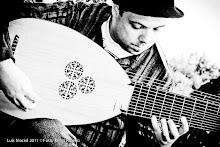
Lute hand position - you can see the difference from a guitar because on the lute, the hand is almost parallel to the strings | Posição de mãos no alaúde - Poderá ver a diferença para um violão porque no alaúde, a mão fica praticamente paralela às cordas.

Me and my buddy Model Hans Frei ca. 1580 - From late Renaissance, covers all Renaissance repertoire, although sometimes I have to tune the 8th order in C (to simulate a 10th order)| Eu e o meu companheiro Modelo Hans Frei ca. 1580 - Dos finais da Renascença, cobre todo o repertório renascentista, apesar de por vezes eu ter de afinar a oitava ordem em Dó (para simular uma décima ordem).

8-Orders detail (as I explained in an earlier post, an "order" is a pair of strings) | Detalhe das 8 ordens (como expliquei num post anterior, uma "ordem" é um par de cordas)

Friday, March 12, 2010

Asteria: next concerts | Asteria: próximos concertos

The divine american medieval/renaissance duo ASTERIA will be live in the next two dates:

Saturday, March 13, 2010, 3:00pm

Lecture/demonstration: "In Search of the Lost Song: bringing medieval chansons to life"sponsored by the Early Music Foundation - The Metropolitan Museum of Art.

1000 Fifth Avenue at 82nd Street - New York, New York 10028

Info: 212-535-7710

Wednesday, April 21, 2010, 1:15-1:45pm

"Music for a Rash Prince ~ Courtly Song in the Waning Middle Ages" presented by Midtown Concert Series

Immanuel Lutheran Church 122 East 88th St, at Lexington Ave - New York, NY 10128

Info: 212-967-9157


Quant la doulce jouvencelle - Asteria (live at Germolles ao vivo em Germolles)

(português)

O divinal duo medieval/renascentista americano ASTERIA se apresentará ao vivo nas duas datas seguintes:

Sábado, 13 de Março - 15h00
Palestra/demonstração: "Em busca da canção perdida: trazendo as chansons medievais à vida" patrocinado pela "Early Music Foundation - The Metropolitan Museum of Art".
1000 Fifth Avenue at 82nd Street - New York, New York 10028
Informações: 212-535-7710

Quarta-feira, 21 de Abril - 13h15-13h45
"Música para um Príncipe arrojado ~ A canção cortesã em finais da Idade Média" apresentado pelas "Midtown Concert Series"
Immanuel Lutheran Church 122 East 88th St, at Lexington Ave - New York, NY 10128
Informações: 212-967-9157

Saturday, February 20, 2010

Wikipedia – Collaborative Encyclopedia? | Wikipédia – Enciclopédia Colaborativa?

col•lab•o•ra•tion [kuh-lab-uh-rey-shuh n] –noun
1. the act or process of collaborating 2. a product resulting from collaboration: This dictionary is a collaboration of many minds.

Yesterday, I spent 30 minutes of my time signing up on Wikipedia - an online free "collaborative" encyclopedia and learning the basics in order to contribute to the entries "lute" and "alaúde", putting my blog at the public’s disposal in the informative resources section of the external links.
Unfortunately, I was told by friends from the Ancient Music scene, that my entries on wikipedia were deleted by administrators and I tried to understand why the hyperlink to this blog was deleted. The reasons can be three: or I vandalized Wikipedia, or I spammed, or I violated the policy of neutrality. Well, if the moderator does not know to be neutral, these three reasons are very concerning.
After getting to know over two hundred people in the Early Music of various countries, be them musicians, organizers, teachers and fans, I think I can answer these questions:

To the Wikipedia administrators of the "lute" and "alaúde" sections, which I don’t really know if they know anything about the instruments, live from contributions from people like me that share freely to everyone in the internet. There’s information provided by my personal research on links contained in wikipedia. I get emails with questions about the lute and respond whenever I can, but next time I get a question from a person associated with this free "collaborative" encyclopedia, maybe I will not be able to cooperate. After all, as many have said, Wikipedia does not bring absolute truths. It is only controlled by people who take their administrator position to the extreme, removing useful information in a subjective and petty way, as if through collaboration we were practicing competition or the invasion of a personal fiefdom.

(português)
colaboração [co.la.bo.ra.ção] sf (colaborar+ção)

1 Ato de colaborar; cooperação; ajuda. 2 Trabalho feito pelos colaboradores. 3 Conjunto dos colaboradores. 4 Inform Reunião de duas ou mais pessoas que trabalham juntas para produzir ou utilizar uma aplicação multimídia.

Ontem, gastei 30 minutos do meu tempo a inscrever-me na wikipedia – uma enciclopédia “colaborativa” online e a aprender o básico para poder dar o meu contributo para a entrada “lute” e “alaúde”, colocando o meu blog à disposição do público na secção de recursos informativos em ligações externas.
Infelizmente, fui informado por amigos do cenário da Música Antiga, que as entradas que dei no wikipedia foram apagadas por administradores e procurei entender porque razão o hiperlink a este blog foi apagado. As razões podem ser três: Ou vandalizei a wikipedia, ou fiz spam, ou violei a política de neutralidade. Bom, se o moderador não souber ser neutral, essas três razões são muito relativas.
Depois de travar conhecimento com mais de duzentas pessoas na Música Antiga de diversos países, sejam músicos, organizadores, professores e admiradores, creio que poderei responder a essas perguntas:

Aos administradores da Wikipedia das secções “lute” e “alaúde”, que não sei realmente se sabem alguma coisa sobre os instrumentos, vivem das contribuições de pessoas como eu, que as dispõem livremente a todos na Internet. Há informações providenciadas pelas minhas pesquisas pessoais em hiperligações contidas na wikipedia. Recebo e-mails com perguntas sobre o alaúde e respondo sempre que posso, mas da próxima vez que receber alguma pergunta de uma pessoa ligada a esta enciclopédia “colaborativa”, talvez não possa colaborar. Afinal de contas, como já muita gente diz, a Wikipedia não traz verdades absolutas. É apenas controlada por pessoas que levam a sua condição de administrador ao extremo, suprimindo informações úteis de um modo subjetivo e mesquinho, como se através da colaboração estivéssemos praticando a competição ou a invasão de algum feudo pessoal.

We're now on Wikipedia! | Estamos agora no Wikipédia!

As of today, we're in Wikipedia on "lute" in the external links section at the bottom of the page. Thus, we reach more people with more information and points of view on this beautiful instrument.
We apologize for any errors in the English language on this blog and we are grateful for any suggestions for improving the texts.
http://en.wikipedia.org/wiki/Lute

(português)
A partir de hoje, estamos no Wikipédia em "Alaúde", na parte das ligações externas, no final da página. Esperamos assim poder chegar a mais pessoas com mais informações e pontos de vista sobre este lindo instrumento.
http://pt.wikipedia.org/wiki/Ala%C3%BAde

Friday, June 26, 2009

The lute in "The Tudors" | O alaúde em "os Tudors"

Last week I was told that there was a TV series about the sixteenth century, where a character played Greensleeves on the lute. I understood it should be “the Tudors". I went to a discount store and bought the two seasons that were on sale.
Until now, I saw about 7 episodes, and in general I liked, especially for showing lutes in all the episodes and a light music for the instrument in the background of the scenes.

However, of course, I was horrified by the director’s freedom in creating an alternative historical reality to Portugal, when Henry VIII sister traveled to Lisbon, in a computer-made ship (looking like a Roman assault tower) to marry the "decrepit and with gout" Portuguese king. In the end of the episode, the English princess suffocates King Manuel I with a pillow, to run away with the English nobleman, which as all Englishmen of the time, was a model and didn’t have any trace of body hair. The Portuguese court, filled with extras ugly as fear, was a small hall with some tropical themes.

Indeed, in 1520, when the story is set, Lisbon was the capital of Europe, vibrant with trade, art and wealth. At that time the Portuguese Court was the pomp and ostentation, with embassies to the Pope, with elephants and rhinos. Lisbon was the oriental exotism, the spices, the porcelain from China and the pole that distributed the goods in northern Europe and the Mediterranean.

Beyond this surreal moment in the series, I saw that the extras that are playing the lute are not lutenists. Up to episode 6, they all used the instrument with the neck to the right side, and the first episode I saw someone using the lute correctly, the extra was playing as a guitarist and without using the figueta technique.

Historical Consultant: Adelino Costa

(português)
A semana passada disseram-me que havia uma série de TV passada no século XVI, onde uma personagem tocava o Greensleeves no alaúde. Percebi que deveria ser “os Tudors”. Fui a uma loja de descontos e comprei as duas temporadas que havia à venda.
Até agora, vi uns 7 episódios, e no geral gostei, principalmente por mostrarem alaúdes em todos os episódios e leve música de fundo para esse instrumento nas cenas.

No entanto, claro, fiquei horrorizado com a liberdade do director em criar uma realidade histórica alternativa para Portugal, quando a irmã de Henrique VIII viajava para Lisboa, dentro de uma nau feita em computador (mais parecida com uma torre de assalto romana) para se casar com o rei português, “decrépito e com gota”. No final do episódio, a princesa inglesa sufoca o rei Manuel I com uma almofada, para fugir com o nobre inglês, que como todos os ingleses da época, era modelo e não tinha vestígio de pelos corporais. A côrte portuguesa, repleta de figurantes feios como o medo, era um pequeno salão com alguns temas tropicais.

Na realidade, em 1520, na altura em que se passa a história, Lisboa era a capital da Europa, vibrante de comércio, arte e riqueza. Naquele tempo a Corte portuguesa era o fausto e a ostentação, com embaixadas ao Papa com elefantes e rinocerontes. Lisboa era o exotismo oriental, as especiarias, as porcelanas da China e o polo que distribuia as mercadorias pelo Norte e pelo Mediterrâneo.

Para além desse momento surreal da série, vejo que os figurantes que tocam alaúde não são alaúdistas. Até ao episódio 6, todos eles usavam o instrumento com o braço para o lado direito, e no primeiro episódio que vi alguém usar o alaúde corretamente, o figurante estava tocando como um guitarrista e sem utilizar a técnica da figueta.

Consultor histórico: Adelino Costa

Sunday, May 10, 2009

The OUD, father of the European Lute | o OUD, pai do alaúde europeu

In the year of 711, a line of highly advanced Muslims invaded the poorly defended Iberian Peninsula and established the Caliphate of Al-Andalus.
The Arabs, among many things, established in the peninsula the taste for arts and the erudite cult of a musical instrument called "oud" ("Ud" in some countries) that later would originate the European lute. They were also the first to establish a music conservatory in Spain by the virtuoso of that time, Zyriab.

As the picture shows, this instrument also has a half-pear shape and to date is commonly used in music of the Middle East and Eastern Mediterranean countries. It differs from the European lute for not having frets (traces on the neck of the instrument) and because it is played with a plectrum (pick).

The oldest image of an Oud dates back to 5000 years ago, in the current city of Nassiriyah in Iraq. This detail caused me enormous impact, because it is possible to imagine the ancient civilizations of the Middle East and Mediterranean already using chordophones (string instruments) in their music. From the Sumerians, Acadians, Persians, Babylonians, Assyrians, Armenians, Greeks, Egyptians and Romans, to the Turks, who later brought the Oud to the battles, by the belief in the magical powers of this instrument.


(português)
No ano de 711, uma linhagem de muçulmanos extremamente avançados invadiu a Península Ibérica mal defendida e estabeleceu o Califado de Al-Andalus.
Os árabes, entre muitas coisas, estabeleceram na Península o gosto pelas artes e o culto erudito de um instrumento musical chamado “oud” (“Ud” em alguns países) que mais tarde daria origem ao alaúde europeu. Foram também os primeiros a estabelecer em Espanha um conservatório de música através do virtuoso da época, Zyriab.

Como a imagem mostra, este instrumento também tem formato de meia-pêra e até aos dias de hoje é comumente usado na música do Médio Oriente e países do Mediterrâneo Oriental. Distingue-se do alaúde europeu por não ter trastes (traços no braço do instrumento) e por ser tocado com palheta.

A imagem mais antiga de um Oud remonta a 5000 anos atrás, na atual cidade de Nassiriyah no Iraque. Esse detalhe causou-me enorme impacto, pois é possível imaginar as civilizações da Antiguidade no Médio Oriente e Mediterrâneo já usando cordofones (instrumentos de corda) na sua música. Dos Sumérios, Acadianos, Persas, Babilônios, Assírios, Armémios, Gregos, Egípcios e Romanos até aos Turcos, que mais tarde traziam o Oud para as batalhas, pela crença nos poderes mágicos desse instrumento.

Wednesday, March 25, 2009

Brief history of the Lute | Breve história do Alaúde


The european lute was born from the modification of an Arabic instrument called 'ud (al'ud), which is still popular in Arab countries nowadays. Al'ud means "the wooden one", which probably was used to distinguish it from other instruments made of other materials. The 'ud was introduced in Europe during the Moorish occupation of the Iberian Peninsula (711-1248 -> Portugal / 711-1492 -> Spain). Some sources believe that it may have entered Europe through the Byzantines in Sicily, or crusaders from the Holy Land, however, the european iconography of the period shows Islamic lutenists in the ninth and tenth Centuries aswell as the famous lutenist “Ziryab” in the court of ‘Abd al Rahman II (822-852) in Andalucia.

During the medieval period, the lute, which had 5 pairs of strings, or courses, was played with a quill as the 'ud, which limited the type of music that could be played and so, the lute was often played together with other instruments, especially to accompany songs. However the use of the 'ud was not restricted to Muslims as shown in illustrations of the "songs of Santa Maria" of Alfonso X the Wise (1221-1284). In the fourteenth Century, a new special writing for lute music was invented, called tablature, in which are given the positions of the fingers. Four main types of tablature were developed: the German, whose creator was Conrad Paulmann, the French, Italian and Spanish. With the new writing and the fingertips technique, an opportunity was created to make arrangements of vocal music (mostly polyphonic). There were so many arrangements that soon lutenists were able to create music generated in their own minds, thus creating a new music: The instrumental music for lute. However, that wouldn’t be possible without the close cooperation of lute manufacturers. We can highlight the most important ones of the period: Laux Maler, Hans Frei, Nicola Sconvelt, Magno Tieffenbrucker and Michael Hartung.
Another important factor in spreading the music of instrumental lute was the publishing of works of great masters by the hands of Ottaviano Petrucci, Antonio Gardano and Girolamo Scotto.

The lute really started to be important at the end of the fifteenth Century, when it was realized that it could be played with fingertips instead of a quill. This meant that the music composed in parts could now be played on the instrument. With the addition of a sixth bass course (pair of strings), the development of a more elegant and elongated body shape and the invention of a tablature system for musical notation, the lute reached its classical perfection and the stage was mounted to a music scene that would last more than 150 years. It is not difficult to see the appeal of the instrument. Lightweight and portable, a much cheaper and easier instrument to maintain than keyboards, it was very versatile - it was used for playing dance music, popular tunes, arrangements of vocal music and accompanying songs, and soon generated a solo repertoire of its own, in form of preludes, passemezzi and the most refined fantasies. It was considered the heir to the Roman Cithara or lira, which gave him even more fame in an era of obsession with classical literature.
Above all, it was the enchanting sound of the lute that turned it so admired. While its format is close to the modern guitar, the sound is very different. The resonance of its body in a half-pear and the less stressed strings give the lute a delicacy and richness that can not be compared with the modern guitar. It is in essence an instrument closer to nature than the modern guitar. The main genres of music from the Renaissance period are the dance, the forms and arrangements of imitative vocal music. The major composers of the Renaissance period were: In Italy, Francesco da Milano amd Vincenzo Galilei, in France: Adrian Leroy, in England: John Dowland and in Germany: Hans Newsidler.
At the end of the sixteenth century, experiences and innovations began to be made. A seventh course was added, then an eighth, then a ninth, eventually reaching 14 courses (pairs of strings) - the intention was partly to increase the range of the instrument to be able to play in a low register when accompanying male singers. To have the extra strings, it was included a new pegbox and a longer neck. New tuning schemes appeared. From these experiences, a new variety of instruments appeared, called “baroque lutes” today. The biggest of all, the Theorbo or Chitarrone was a bass instrument, used for accompanying, with a longer second neck that often makes the instrument longer than the musician that plays it. In France, a minor instrument of 11, 12 or 13 courses tended to be favored, the first 7 courses could be stopped with the left hand and the other strings are played openly like the strings of the harp. At the beginning of the seventeenth century a new musical aesthetic made a new musical style(homophonic) appear and with that, further refinements and new tunings had to be developed to meet this new way of making music.

French lutenists researched and developed several tunings which were known at the time as "French lute. In the middle of the seventeenth century it was the pattern tuning in D minor that made history as the "Baroque tuning". The main feature of the music of this period was the convention to play certain passages between the soprano and bass not simultaneously as in the polyphonic style, but successively, which greatly influenced harpsichord composers and which became known as "Style Brisée. The major composers of the period was Robert Ballard, Charles Mouton and Denis Gaultier. The music of this period, with its technical refinements and tunings, influenced the German lutenists in the 1680-1750 period. After an interval of relative inactivity, the composers experienced a revival of interest in the lute. Among these composers we can highlight Le Sage de Richée (born 1695), Ernst Baron (1696-1760), Adam Fackenhagen (works published in 1742 and manuscript of 1756), Jacques Bittner (work published in 1682 and 1683) and Sylvius Leopold Weiss (1687-1750) the most prolific composer of the period. These were joined by the divine J.S.Bach which contributed much to the lute music including the instrument in his “Funeral Ode” and St. John and St. Matthew Passions. The compositions of this period often take the form of a suite, starting with a prelude and continuing with dances selected among the ones in fashion at the moment such as the Courante, the Polonaise, the Allemande, the Minuet and the Gigue.

However, at the end of the XVII Century, the days of the lute were clearly numbered. The emergence of orchestras, operas and commercial concert halls placed the lute in great disadvantage - It simply could not be heard in a big noisy hall. The rising standard of living of the people also meant that more people had money to buy keyboards, which were easier to play and made possible to perform more complex harmonies. Furthermore, the extreme difficulty of playing the lute made other musicians turn to the 5 order baroque guitar. After 1760, few compositions for lute were made and the last publishing was in 1780.
In the nineteenth century, it was almost forgotten, being preserved and played only in a small circle of british intellectuals. In the twentieth century, the trajectory of the instrument was recovered and music history researched.
Today it is an instrument very valued by musicians in general but also by listeners. In the 70s, recordings by Julian Bream benefited immensely the lute, and fortunately the standard of quality is very high with regard to interpretation of lute music and the building of instruments, after models of the age. Today, ¾ of lutenists are ex-guitarists who were seduced by the Richness of the lute repertoire.

The lute witnessed a succession of the Golden Eras of composition. The first of these was in Renaissance Italy, where the great lutenist Francesco da Milano (1497-1543) divided with Michelangelo the nickname of "Il Divino" (the divine one). It was said that when he played, all thoughts passed through Paradise. In the middle of the sixteenth century, Spain produced a school of great composers, playing the "vihuela" (See “The Vihuela A Vihuela”) whose compositions are well known to today’s guitarists. The next high point came in Elizabethan England, with the sweet and melancholic fantasies of John Dowland and his contemporaries. The baroque lute produced two major schools of composition: the French, in the middle of the seventeenth century, where Gaultiers, Dufault and De Visée and others created an stately and self-confident style of music; and early in the eighteenth century Germany, where J.S.Bach composed for lute, and and the most well-succeded lutenist and composer of all times lived, Sylvius Leopold Weiss, bringing his arpeggiato style to the maximum of beauty humanely possible.

This article is based on several sources available on the Internet. I don't do historical research on the lute and I believe that history can not be invented. In these circumstances, my intention is only to disclose and make known the lute to more people, complementing this blog with some historical information.

Recommended Music:
Dowland, John - Complete Lute Works - Paul O'Dette - Harmonia Mundi

(português)
O alaúde europeu nasceu da modificação de um instrumento árabe chamado ‘ud (al’ud), que é ainda popular nos países árabes até aos dias de hoje. Al’ud significa “o de madeira”, que provavelmente serviu para o distinguir de outros instrumentos feitos com outros materiais. O ‘ud foi introduzido na Europa durante a ocupação moura da Península Ibérica (711-1248 > Portugal / 711-1492 > Espanha). Algumas fontes acreditam também que possa ter entrado na Europa através dos bizantinos na Sicília, ou por cruzados vindos da Terra Santa, no entanto, a iconografia européia do período mostra alaúdistas islâmicos nos séculos IX e X e também o famoso Ziryab na corte de ‘Abd al Rahman II (822-852), na Andaluzia.

Durante o período medieval, o alaúde, que tinha 5 pares de cordas, ou ordens, era tocado com uma palheta, como o ‘ud, o que limitava o tipo de música que poderia ser tocada e assim o alaúde era freqüentemente tocado em conjunto com outros instrumentos, sobretudo para acompanhar canções.
Entretanto o uso do ‘ud não ficou restrito aos muçulmanos como mostram ilustrações das “cantigas de Santa Maria” de Alfonso X, o Sábio (1221-1284).

No século XIV foi inventada uma escrita especial para a música de alaúde, chamada tablatura, na qual são dadas as posições dos dedos. Quatro tipos principais de tablatura foram desenvolvidos: a alemã, cujo criador foi Conrad Paulmann, a francesa, a italiana e a espanhola. Com a nova escrita e com a técnica de figueta criou-se logo a possibilidade de fazer arranjos de música vocal (essencialmente polifônica). Foram tantos arranjos que logo os alaúdistas estavam aptos a criar músicas a partir de um material engendrado em suas próprias cabeças, criando assim, uma nova música: A música instrumental de alaúde. Entretanto, nada disso seria possível sem a estreita colaboração dos fabricantes de alaúdes. Podemos destacar como os mais importantes do período: Laux Maler, Hans Frei, Nicola Sconvelt, Magno Tieffenbrucker e Michael Hartung.
Outro importante fator de disseminação da música instrumental de alaúde foi a edição de obras de grandes mestres pelas mãos de Ottaviano Petrucci, Antonio Gardano e Girolamo Scotto.

O alaúde realmente passou a ganhar uma grande importância em finais do século XV quando se compreendeu que poderia ser tocado com a ponta dos dedos em vez de palheta. Isto significava que a música composta em partes poderia agora ser tocada no instrumento. Com a adição de um sexto par de cordas baixo (ordem), o desenvolvimento de um formato mais elegante e alongado e a invenção de um sistema de tablatura para notação musical, o alaúde atingiu a perfeição clássica e o palco estava montado para um cenário musical que iria durar mais de 150 anos.

Não é difícil ver o apelo do instrumento. Leve e portátil, um instrumento muito mais barato e fácil de manter do que teclados, era muito versátil – era usado para tocar música de dança, música popular, arranjos de música vocal e acompanhamento de canções, e logo gerou um repertório solo próprio, em forma de prelúdios, passemezzi e as mais refinadas fantasias.
Era considerado o herdeiro da citara ou lira romana, o que ainda lhe dava mais fama, numa era de obsessão pela literatura clássica.
Acima de tudo, foi o som encantador do alaúde que o tornou tão admirado. Enquanto o seu formato é relativamente parecido com a guitarra moderna, o som é muito diferente. A ressonância do seu corpo em meia-pêra e as cordas menos tencionadas dão ao alaúde uma delicadeza e riqueza que não se pode comparar com a guitarra moderna. É em essência um instrumento mais próximo da Natureza do que a guitarra moderna.

Os principais gêneros de música do período renascentista são a dança,as formas imitativas e os arranjos de música vocal. Os principais compositores do período renascentista foram: na Itália, Francesco da Milano e Vincenzo Galilei, na França: Adrian Leroy, na Inglaterra: John Dowland e na Alemanha: Hans Newsidler.

No final do século XVI, começaram a ser feitas experiências e inovações. Uma sétima ordem foi acrescentada, depois uma oitava, depois uma nona, eventualmente chegando a 14 ordens (ou pares de cordas) – a intenção era parcialmente aumentar o alcance do instrumento para se poder tocar num registro grave quando acompanhando cantores masculinos. Para poder ter as cordas extras, foi incluídos uma nova cravelheira e um braço mais comprido. Novos esquemas de afinação apareceram. Destas experiências, uma nova variedade de instrumentos apareceu, designados hoje de “alaúdes barrocos”.
O maior de todos, a Teorba ou Chitarrone, era um instrumento baixo, usado para acompanhamento, com um longo segundo braço que freqüentemente torna o instrumento maior do que o músico que o toca. Em França, um instrumento menor de 11, 12 ou 13 ordens tendia a ser favorecido; as primeiras 7 ordens poderiam ser paradas com a mão esquerda e as restantes ordens eram tocadas abertas como as cordas de harpa.

No começo do século XVII uma nova estética musical fez surgir um novo estilo musical (homofonia) e com isso tiveram de ser desenvolvidas novas afinações para atender a esta nova maneira de se fazer música. Os alaúdistas franceses pesquisaram e desenvolveram várias afinações que na época ficaram conhecidas como “Alaúde Francês”. Em meados do século XVII chegou-se à afinação padrão em ré menor que passou à história como a “afinação barroca”. A principal característica da música deste período era a convenção de se tocar certas passagens entre o baixo e o soprano não simultaneamente como no estilo polifônico, mas sucessivamente, o que influenciou imenso os compositores de cravo e que ficou conhecido como “Style Brisée”. Os principais compositores do período foram Robert Ballard, Charles Mouton e Denis Gaultier.
A música deste período, com suas técnicas e afinações, influenciou os alaúdistas alemães do período 1680-1750. Após um intervalo de relativa inatividade, os compositores experimentaram um revivalismo do interesse pelo alaúde. Entre estes compositores podemos destacar Le Sage de Richée ( nascido em 1695 ), Ernst Baron (1696-1760), Adam Falckenhagen (trabalhos publicados em 1742 e manuscrito de 1756 ), Jacques Bittner (trabalhos publicados em 1682 e 1683 ) e Sylvius Leopold Weiss (1687-1750) o mais prolífico compositor do período. A estes se junta o divino J. S. Bach que muito contribuiu para a música de alaúde incluindo este instrumento na Ode Fúnebre e também nas Paixões segundo São João e São Mateus. As composições deste período freqüentemente adotam a forma de suíte, começando com um prelúdio e continuando com danças selecionadas entre as mais em moda no momento tais como a courante, a polonaise, a allemande, o minueto e a giga.
No entanto, em finais do Século XVII, os dias do alaúde estavam claramente contados. O aparecimento de orquestras, operas e das salas de concerto comerciais puseram o alaúde em grande desvantagem – Ele simplesmente não poderia ser ouvido numa grande sala barulhenta. O nível de vida crescente das pessoas também significava que cada vez mais gente tinha dinheiro para adquirir teclados, que eram mais fáceis de tocar e possibilitavam realizar harmonias mais complexas. Por outro lado, a extrema dificuldade de tocar alaúde fazia outros músicos favorecer a guitarra barroca de 5 ordens.

A partir de 1760 poucas composições para alaúde foram feitas, e a última edição data de 1780. No século XIX, praticamente ficou esquecido, sendo preservado e tocado apenas num pequeno círculo de intelectuais ingleses.No século XX, a trajetória do instrumento foi resgatada e música histórica pesquisada. É hoje, um instrumento bastante valorizado tanto pelos músicos em geral como também pelos ouvintes.

Nos anos 70s, as gravações de Julian Bream beneficiaram imensamente o alaúde, e felizmente a fasquia de qualidade é muito alta no que toca à interpretação da música de alaúde e na construção dos instrumentos, segundo modelos da época. Hoje em dia, ¾ dos alaúdistas são ex-guitarristas que foram seduzidos pelas riquezas do repertório para alaúde.

O alaúde testemunhou uma sucessão de Eras de Ouro da composição. A primeira destas foi na Itália renascentista, onde o grande alaúdista Francesco da Milano (1497-1543) dividiu com Michelangelo o apelido de “Il Divino”. Dizia-se que quando ele tocava, todos os pensamentos passavam pelo Paraíso.
Em meados do século XVI, a Espanha produziu uma escola de grandes compositores, tocando a “vihuela” (Ver “The Vihuela A Vihuela”) cujas composições são bem conhecidas dos guitarristas de hoje em dia.
O ponto alto seguinte surgiu na Inglaterra Isabelina, com as fantasias doces e melancólicas de John Dowland e seus contemporâneos.

O alaúde barroco produziu duas grandes escolas de composição: a francesa, de meados do século XVII, onde os Gaultiers, Dufault e De Visée e outros criaram um estilo de música imponente e auto-confiante; e no início do século XVIII na Alemanha, onde J.S. Bach compôs para alaúde, e o mais bem sucedido alaúdista e compositor de todos os tempos viveu, Sylvius Leopold Weiss, levando o seu estilo arpeggiato ao máximo da beleza humanamente possível.

Este artigo é baseado em várias fontes disponíveis na Internet. Não faço investigação histórica sobre o alaúde e acredito que a História não pode ser inventada. Nessas circunstâncias, a minha intenção é apenas a de divulgar e de dar a conhecer o alaúde a mais gente, complementando este blog com alguma informação histórica.

Música recomendada:
DOWLAND, John – Complete Lute Works – Paul O’Dette – Harmonia Mundi

Wednesday, March 11, 2009

The real instrument of Angels | O verdadeiro instrumento dos Anjos

Usually there is the idea that the harp is the instrument of angels, this is evident in modern representations of baby-faced angels, especially for commercial purposes. However, if you look better to the vast majority of antique pictures, the angel musicians play the lute, sometimes in small musical groups.
In fact, the lute mesh well with the harp. Master Eugène Ferré said he had some harp students learning the technique of the lute, which has a similar hand positioning of the harp.

I have colleagues that look at me and smile as if I had just come out of a Time Tunnel with a lute in my hands. Others think I shouldn't worry, because as a lutenist, I must already have a job waiting for me in Heaven.

And, honestly, what kind of music connects us with the immensities of the sky and the oceans than the music of lute? I Imagine a choir of angels or a solitary landscape close to Mother Nature, perhaps a huge palace in the kingdom of the clouds.

I love to think that Sylvius Leopold Weiss, for example, must be playing and composing many more divine works in the place he truly belongs, the Eternal Sky.
Recommended Music:
Weiss, Sylvius Leopold - Sonatas for lute, Robert Barto - Naxos
(Divine music played by a lutenist from another dimension!)


(português)
Costuma haver a idéia que a harpa é o instrumento dos anjos, isso está bem patente nas representações modernas de anjos com cara de menino, sobretudo com fins comerciais. No entanto, se reparar melhor, na grande maioria das imagens antigas, os anjos músicos tocam alaúde, às vezes em pequenos conjuntos musicais.
A bem da verdade, o alaúde entrosa muitíssimo bem com a harpa. O mestre Eugène Ferré dizia inclusivamente ter alguns alunos de harpa aprendendo a técnica do alaúde, que tem um posicionamento de mão semelhante ao da harpa.

Tenho colegas que me olham e sorriem como se eu tivesse acabado de sair dum túnel do tempo com o alaúde na mão. Outros acham que eu não me devo preocupar, pois como alaúdista já devo ter um trabalho à espera no Céu.

E, honestamente, que tipo de música nos conecta mais com as imensidões do Céu e dos Oceanos do que a música de alaúde? Imagino um coro de anjos ou uma paisagem solitária junto da Mãe Natureza, talvez um palácio enorme no reino das nuvens.

Adoro pensar que Sylvius Leopold Weiss, por exemplo, deve estar tocando e compondo muito mais obras divinas no lugar a que ele verdadeiramente pertence, o Céu Eterno.

Música recomendada:
Weiss, Sylvius Leopold – Sonatas para alaúde, Robert Barto – NaXoS
(musica divina interpretada por um alaúdista de outra dimensão!)

Wednesday, February 11, 2009

The Lute in my life | O alaúde em minha vida

Music entered very early in my life. My brother, who is 6 years older than me, used to listen to a lot of radio music when I was little. He was my first and primary reference. The oldest musical memory I have is when I was 5 years old. Somehow I managed to ask my parents to buy me the “Le Papa Pingouin” single by Sophie et Magaly, which made me vibrate during the Eurovision festival 1980. During this time, my brother already exposed me to rock music and had a collection of a fair number of vinyl discs, including alternative sounds like "Dead Can Dance." I remember how I used to be wild with "neverending story" by Limahl, "The Final Countdown" by Europe and "Sounds Like a Melody" by Alphaville. But it was in 1985, that 3 musical moments took my passion for music to a new dimension and that made me want to play instruments and explore this new and rich world:
1 - My brother buys the album "Love" by "The Cult". Still consider it one of the best albums of all time, with tremendous artistic and musical taste, with an attractive gothic look, which made me want to get more music, more history, more graphic arts and learn the English lyrics.
2 - I watch the movie "Amadeus." Still my favorite movie, which alone made me go learn to play piano. During several days, a dark VHS tape on the shelf used to frighten me, until one day when I took courage and decided to see this "terror movie." At the beginning of the movie, when the old Salieri says: "Mozart!" And the picture shows the child prodigy, playing for the Pope, my life changed forever.
3 - I hear lute music for the first time. Sometimes my brother discovered alternative radios, often nocturnal, in which he used to record chilly organ music, the ultra-fast "Ride the Sky" by Helloween and mysterious lute songs, which I played on my recorder over and over. (Today, with the distortion that music gets in the mind for 15 years, I only found one, by John dowland, probably played by Julian Bream). For the love of this new type of music, so connected to my way of feeling and the historical memory of the country where I was born, I came to suffer a humiliation at school. The teacher gave us the painting "starry night" by Von Gogh and asked us to bring a music that connected us to the painting, and a text. Three students offered as volunteers, I was one. However, all colleagues preferred U2 and Belinda Carlisle than John dowland, and made fun of my text about a renaissance feast of my. I have always been different in that aspect. It was a bit after this episode that I lost contact with lute music for many years. Already in the 90s, I rediscovered the lute through the Hespèrion XX. Of all those wonderful musicians, I focused on Rolf Lislevand, the lutenist that a little later I saw on TV playing with Montserrat Figueras. I was excited by the sound and style. A little later I bought a Jacques de Gallot CD by Hopkinson Smith, one of the biggest references of the lute music.


(português)
A música entrou na minha vida bem cedo. Meu irmão, que é 6 anos mais velho que eu, ouvia muita música na rádio quando eu era pequenino. Ele foi a minha primeira e principal referência. A memória musical mais remota que tenho foi de aos 5 anos ter de algum modo conseguido que os meus pais me comprassem o disco single de Sophie et Magaly, “Le Papa Pingouin”, que me tinha feito vibrar durante o festival da Eurovisão 1980. Durante esse tempo já o meu irmão me expunha a música rock e colecionava já um número razoável de discos de vinil, incluindo sons mais alternativos como “Dead can Dance”. Lembro-me de delirar com “neverending story” de Limahl, “The Final countdown” dos Europe e “Sounds Like a Melody” dos Alphaville. Mas foi em 1985, que 3 momentos musicais levaram a minha paixão pela música a outra dimensão e que me fizeram querer tocar instrumentos e explorar esse novo e rico mundo:
1- O meu irmão compra o álbum “Love”, dos "The Cult".
Ainda hoje o considero um dos melhores álbuns de todos os tempos, de tremendo bom gosto musical e artístico, com um visual gótico e atraente que me fez ir buscar mais música, mais história, mais artes gráficas, aprender o inglês das letras.
2- Eu assisto ao filme “Amadeus”.
Ainda hoje o meu filme preferido e que me fez sozinho ir aprender a tocar piano. Durante alguns dias a cassete VHS de capa sombria estava em cima da cômoda e assustava-me, até que um dia tomei coragem e decidi ver esse “filme de terror”. No início do filme, quando o velho Salieri diz: “Mozart”!, e a imagem mostra o menino-prodígio tocando para o Papa, a minha vida mudou para sempre.
3- Eu ouço música de alaúde pela primeira vez.
Algumas vezes o meu irmão descobria rádios alternativas, muitas vezes noturnas, em que gravava música de órgão que causava calafrios, o aceleradíssimo “Ride the Sky” dos Helloween, e algumas músicas misteriosas de alaúde, que eu tocava no meu gravador vezes sem conta. (Hoje, com a distorção que a música sofre na memória durante 15 anos, apenas descobri uma, que pertence a John Dowland, provavelmente tocada por Julian Bream).

Por amor a esse novo tipo de música, tão conectado à minha forma de sentir e à memória histórica da terra onde nasci, cheguei até a sofrer uma humilhação na escola. A professora deu-nos a pintura “noite estrelada” de Von Gogh e pediu para nós trazermos uma música que nos ligasse à pintura, e um texto. Três alunos se ofereceram como voluntários, eu era um deles. No entanto, todos os colegas preferiram U2 e Belinda Carlisle do que John Dowland, ridicularizando o meu texto de viagem ao passado de um banquete renascentista. Sempre fui diferente nesse aspecto.

Foi um pouco depois desse episódio que perdi o contacto durante muitos anos com a música de alaúde.
Já na década de 90, redescobri o alaúde através dos CDs do Agrupamento Hespèrion XX. De todos aqueles maravilhosos músicos, para mim tinha destaque Rolf Lislevand, o alaúdista que um pouco mais tarde vi acompanhar Montserrat Figueras na televisão. Fiquei entusiasmado pelo som e pelo estilo. Um pouco mais tarde comprei um CD de Jacques de Gallot, por Hopkinson Smith, que em pouco tempo percebi ser uma das maiores referências da actualidade.

Tuesday, February 10, 2009

What's a lute? | O que é um alaúde

The lute is a plucked string instrument, which was very popular in Europe during the XVI and XVII centuries. It is an almost entirely built in wood, with the characteristic shape of a half pear, a short neck and a pegbox angled back from the neck at almost 90º (presumably to help hold the low-tension strings firmly against the nut, which is not traditionally glued in place, but is held in place by string pressure only). The soundboard is normally built in spruce, and has a decorated sound opening, called “Rose”.The strings of the lute were originally made of gut, sometimes in combination with metal, but modern manufacturers also use nylon. The lute is arranged in pairs of strings called “courses”, and a single high-pitched string called “chanterelle”. The number of courses varies from 4 to 5 in the medieval period, from 6 to 10 in the Renaissance period, and 13 in the Baroque period.

(português)
O alaúde é um instrumento antigo de cordas beliscadas, que foi muito popular na Europa durante os séculos XVI e XVII. É quase totalmente construído em madeira, com a forma característica de uma meia pêra, um braço curto e cravelheira em ângulo quase de 90º (presumivelmente para ajudar a segurar as cordas pouco tensionadas firmemente contra a “pestana”, que tradicionalmente não é colada mas antes mantida no lugar sob pressão). O tampo é construído normalmente em pinho, e tem uma detalhada abertura esculpida, chamada “rosácea”.
As cordas do alaúde eram originalmente feitas de tripa, por vezes em combinação com metal, mas os fabricantes modernos também usam o nylon. O alaúde é organizado em pares de cordas chamadas “ordens”, e uma única corda aguda chamada “cantarela”. O número de ordens varia de 4 ou 5 no período medieval, de 6 a 10 no período renascentista, e para 13 no período barroco.