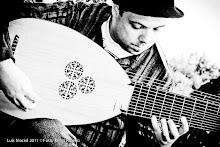
Continuing with the last post about my program in the next presentation of the Early Music students, one more song was added: "Fortune my Foe" by John Dowland. My colleague Tiago will also play an extra song in an archlute.
Here is that song in a Edin Karamazov video. (Studio sound)
(português)
Em continuidade com o último post sobre o meu programa para a próxima apresentação dos alunos de Música Antiga, foi acrescentada mais uma música: "Fortune my Foe" de John Dowland. O meu colega Tiago tocará também uma música extra num arquialaúde.
Aqui fica a referida música, num video de Edin Karamazov. (Som de estúdio)
Friday, June 4, 2010


Sunday, May 30, 2010
Repertoire for next recital | Repertório para o próximo recital
 Next Early Music students recital, in 3 weeks, the configuration of EMB's lutenists will be different. We are going on stage as a trio, the teacher, me and my colleague Tiago.
Inicially, Tiago and me will play 3 lute duos - "La Spagna" by Francesco da Milano, "Queen's Treble" and "A toy for two lutes". Then, teacher Dell'Isola will join us so we play a small french renaissance program: 6 gaillardes and 6 pavanes by Pierre Attaingnant. We will make three stops so that each of us play a solo music. Mine will be "Tant que Vivray", also by Attaingnant.
(Português)
No próximo recital dos alunos de Música Antiga, em 3 semanas, a configuração dos alaúdistas da EMB será diferente. Vamos nos apresentar em trio, o professor, eu e o meu colega Tiago.
Inicialmente o Tiago e eu vamos tocar 3 duos de alaúde - "La Spagna", de Francesco da Milano, "Queen's treble" e "A toy for two lutes". Depois o professor Dell'Isola junta-se a nós para tocarmos um pequeno programa do renascimento francês: 6 gaillardes e 6 pavanas de Pierre Attaingnant. Faremos três intervalos para cada um de nós tocar uma música solo. A minha será o "Tant que vivray", também de Attaingnant.
Saturday, May 22, 2010
Robert Barto, reincarnation of Weiss? | Robert Barto, reencarnação de Weiss?
 Have you ever looked to a Robert Barto photo with attention? Imagine Mr. Barto using an early XVIII century wig. Doesn't he look like the reincarnation of Sylvius Leopold Weiss, perhaps Johann Sebastian Bach?
If you own his recordings for Naxos and treasure them as the Holy Grail, this thought has probably passed through your mind before, but if you never heard about the career of this gentleman, you should try listening and buying his 9 Weiss CDs on Naxos (cheaper price).
More seriously, while hearing this american baroque lutenist playing Weiss, it's hard not to think that this unbelievable musician could be the reincarnation of Weiss, or better, a 5 euros time-travel to german and polish Courts of the early XVIII century. Essential listening!
Português
Já alguma vez olhou para a foto de Robert Barto com atenção? Imagine o Sr. Barto usando uma peruca do início do século XVIII. Não parece a reencarnação de Sylvius Leopold Weiss ou até talvez Johann Sebastian Bach?
Se você tem as suas gravações para a Naxos e as guarda como um tesouro maior que o Santo Graal, este pensamento provavelmente já passou pela sua cabeça antes, mas se ainda não ouviu sobre a carreira deste cavalheiro, devia tentar ouvir ou comprar os seus 9 CDs de Weiss na Naxos (preço mais barato).
Mais a sério, enquanto se ouve este alaudista barroco norte-americano tocando Weiss, é dificil não pensar que este músico inacreditável possa ser a reencarnação de Weiss, ou melhor, uma viagem no tempo de 5 euros até às Côrtes alemãs e polonesas do início do século XVIII. Escuta essencial!
Sunday, May 16, 2010
The nervousness of a Recital - part 2 | O nervosismo de um recital - parte 2
I apologize to the English language readers, but specially in my most personal posts like this one, translating is getting increasingly difficult for me as I refine the Portuguese part. I would much appreciate any suggestions or corrections of my corruptions of the English language – Luís Maciel, blog owner.
 During this week I was on stage in the Early Music students Audition, at the Music School of Brasilia (EMB). The first time I played in public was at the end of the first half of 2008, and the experience was the basis for the post of April 2009 in this blog, titled "The nervousness of a recital."
My presentation had as main pieces, two lute duets with my colleague Tiago, of the group practice classes: "Queen's Treble" by John Johnson, and "A Toy", by Thomas Robinson. Both duos have a continuous solo, with each lutenist soloing and accompanying three times alternately. In addition, each of the musicians had to play 3 to 4 individual pieces.
In the two or three classes before the audition, I tried to exchange some ideas with the teacher about the psychological part that affected me so much the first time, and assimilated some important tips to implant in my head. I practiced and improved the pieces that I would have to play until I played them well and have some margin for error or nervousism. Two or three days before the audition I delivered myself to a new idea, a psychological inversion: Instead of entering into the anguishing countdown to get on the scaffold-stage, I started thinking just the opposite - I WANTED to be on stage, and I barely could wait for it. I Visualized myself in silent protests "What about me? I want to play too! It’s me now. "
The day of the hearing came and I went to EMB as in a normal lute class day, with confortable clothes and without being dressed as a choirboy, with shiny torture shoes. Just talked to three people about the event, I did not care what the audience would think about me and didn’t want to document anything with pictures. In fact, I didn’t shave, perhaps to convince myself that I didn’t take the audition as a matter of life and death. I believe that these small measures have helped me at this stage to normalize a kind of presentation that will become more frequent in the future, and in the end, I was quite surprised at my tranquility.
The hearing was held in the Theatre Hall of EMB, a larger place and with much better acoustics and comfort for the audience. It got to be delicious to make a sort of "sound check" on stage, while some public arrived. When the presentations began, by my count there should be at least 80 people watching, which represented a huge increase for me since the first time. I began to feel some anxiety and some moisture on the hands, but the strangest thing was when I had a sudden attack of sleep about five minutes from my turn, which made me make a lightning-pause for a 10 second coffee.
At the stage, although relatively calm, I noticed that the moisture of my hands was now cold. I paused and began. I was pleased with the choice for first song, with which I felt very comfortable, and so played by heart without tablature. I found myself with enough ease to make pauses in breathing and close my eyes when I wanted. I was testing myself, and knowingly I didn’t feel nervous.
I played my other pieces, including "Tant que vivray" by Claudin de Sermisy / Pierre Attaingnant, which due to its increased difficulty I feared could become a cacophony of sounds of shaky fingers on wrong strings, but I did well. At the end of my presentation I must have made 3 minor errors in four songs, but I don’t know if most people noticed, and if they did, perhaps they did it by looking at my facial expressions.
When I finished, I received applause which I thanked and called Tiago for the duos. Perhaps because we are not yet technical course students as most of the excellent musicians who performed, I noticed the public smiling a lot. Initially I thought it was out of sympathy and condescension towards us, but then realized that us two together on stage had increased our confidence and we took a clearer sound of the lute, and in the end, it must have closed our presentation with the satisfaction of the audience. I was happy to have improved considerably since the first time, to have pleased the public and not have let the teacher down.
The main experience that I took from this event was that of at the middle of my songs and with the lack of panic, having started to have a powerful and new feeling: I was having fun being in that place. A feeling that made me wish for the next audition.
I also give importance to the class days at EMB, when I sit on a bench to play the songs as dozens of students pass. Some stop to listen or ask about the exotic instrument, an habit of playing for people grows.
Over time and with the experience and intimacy gained on the instrument, people around fall to a secondary level, and the musician-instrument pair sails alone in the sound, travels in time or stays in an introspective moment, even surrounded by audience. It got me the idea that this feeling brought to the stage, is nothing more than concentration.
For Eternity: “Every adversity has the seed of an equivalent or greater benefit” – Napoleon Hill
Português
Durante esta semana me apresentei em palco na Audição de alunos de Música Antiga, na Escola de Música de Brasília (EMB). A primeira vez que tinha tocado em público foi no final do primeiro semestre de 2008, e a experiência serviu de base para o post de Abril de 2009 neste blog, intitulado “O nervosismo de um recital”.
A minha apresentação tinha como peças principais, dois duos de alaúde com o meu colega Tiago, das aulas de prática de conjunto: “Queen’s Treble”, de John Johnson, e “A Toy”, de Thomas Robinson. Os duos têm um solo contínuo, com cada alaúdista solando e fazendo o acompanhamento alternadamente por três vezes. Além disso, cada um dos músicos tinha de apresentar de 3 a 4 peças individuais.
Nas duas ou três aulas antes da apresentação, procurei trocar algumas idéias com o professor sobre a parte psicológica que tanto me afetou da primeira vez, e consegui assimilar algumas dicas importantes para implantar na minha cabeça. Fui praticando e melhorando as peças que teria de apresentar até as tocar bem e poder ter alguma margem para erro ou nervoso. Foi a dois ou três dias da audição que me entreguei a uma nova idéia, uma inversão psicológica: Em lugar de entrar em angustiante contagem decrescente para subir ao palco-cadafalso, comecei a pensar justamente o oposto – Eu QUERIA estar em palco, e mal podia esperar a hora. Visualizava-me em protestos silenciosos de “e eu? Também quero tocar! Agora sou eu!”.
O dia da Audição chegou e eu fui para a EMB como num dia de aula normal, com roupa confortável e sem estar vestido de menino de coro, com sapatos brilhantes e torturadores. Apenas falei do evento a três pessoas, não me preocupei no que pensaria a platéia sobre mim e nem quis documentar nada com fotos. De fato, nem me barbeei, talvez para me convencer que não levava a Audição como assunto de vida ou morte. Creio que essas pequenas medidas me ajudaram nesta fase a normalizar um tipo de apresentação que se tornará mais freqüente no futuro, e no final de contas, fiquei bastante surpreendido com a minha tranqüilidade.
A Audição realizou-se no Teatro de Câmara da EMB, um local mais amplo e com muito melhores condições de acústica e conforto para a platéia. Chegou a ser delicioso fazer uma espécie de “sound check” em palco, enquanto algum público chegava. Quando começaram as apresentações, pelas minhas contas deveriam estar umas 80 pessoas no mínimo a assistir, o que representou um aumento enorme para mim desde a primeira vez. Comecei a sentir alguma ansiedade e alguma umidade nas mãos, mas o mais estranho foi ter tido um súbito ataque de sono a cinco minutos da minha vez, o que me fez fazer uma pausa-relâmpago para um café de dez segundos.
Ao subir ao palco, embora relativamente tranqüilo, reparei que a umidade das minhas mãos era agora gelada. Fiz uma pausa e comecei. Fiquei contente com a escolha da primeira música, com a qual me sinto muito confortável, e por isso toquei de cor sem tablatura. Dei por mim com a tranqüilidade suficiente para fazer as pausas que quis para respirar e até fechar os olhos quando quis. Estava me testando, e conscientemente não me sentia nervoso.
Toquei as minhas outras peças, incluindo o “Tant que Vivray”, de Claudin de Sermisy / Pierre Attaingnant, que devido à maior dificuldade eu temia se tornar numa cacofonia de sons de dedos tremidos em cordas erradas, mas saiu bem. No final da minha apresentação talvez tenha dado uns 3 pequenos erros em 4 músicas, mas não sei se a maioria das pessoas reparou, e se o fez talvez tenha sabido pelas minhas expressões faciais.
Quando acabei, recebi palmas, agradeci e chamei o Tiago para fazermos os duos. Talvez por ainda não sermos alunos do curso técnico como a maioria dos excelentes músicos que se apresentaram, reparei que o público sorria bastante. Inicialmente achei que era por simpatia e condescendência para conosco, mas depois realizei que os dois juntos em palco fez aumentar a nossa confiança e tirar um som mais claro do alaúde, e no final de contas, isso terá fechado a nossa apresentação com o agrado da audiência. Fiquei feliz por ter melhorado muito desde a primeira vez, de ter agradado ao público e de não ter deixado ficar mal o professor.
A principal experiência que retirei deste evento, foi a de a meio das minhas músicas e com a ausência de pânico, ter passado a sentir uma sensação nova e poderosa: Eu estava me divertindo de estar naquele lugar. Um sentimento que me fez desejar a próxima audição.
Dou também importância aos dias de aulas na EMB, em que me sento num banco a tocar as músicas enquanto passam dezenas de alunos. Alguns param para escutar ou perguntar sobre o exótico instrumento, vai crescendo um hábito de tocar para pessoas.
Ao longo do tempo, e com a experiência e intimidade ganha com o instrumento, as pessoas em volta passam para um plano mais secundário, e o par músico-instrumento navega sozinho no som, viaja no tempo ou fica num momento de introspecção, mesmo rodeado de público. Ficou-me a idéia que esse sentimento trazido para o palco, nada mais é que a concentração.
Para a Eternidade: “Toda a adversidade trás a semente de um benefício equivalente ou maior”. – Napoleon Hill
 During this week I was on stage in the Early Music students Audition, at the Music School of Brasilia (EMB). The first time I played in public was at the end of the first half of 2008, and the experience was the basis for the post of April 2009 in this blog, titled "The nervousness of a recital."
 My presentation had as main pieces, two lute duets with my colleague Tiago, of the group practice classes: "Queen's Treble" by John Johnson, and "A Toy", by Thomas Robinson. Both duos have a continuous solo, with each lutenist soloing and accompanying three times alternately. In addition, each of the musicians had to play 3 to 4 individual pieces.
In the two or three classes before the audition, I tried to exchange some ideas with the teacher about the psychological part that affected me so much the first time, and assimilated some important tips to implant in my head. I practiced and improved the pieces that I would have to play until I played them well and have some margin for error or nervousism. Two or three days before the audition I delivered myself to a new idea, a psychological inversion: Instead of entering into the anguishing countdown to get on the scaffold-stage, I started thinking just the opposite - I WANTED to be on stage, and I barely could wait for it. I Visualized myself in silent protests "What about me? I want to play too! It’s me now. "
The day of the hearing came and I went to EMB as in a normal lute class day, with confortable clothes and without being dressed as a choirboy, with shiny torture shoes. Just talked to three people about the event, I did not care what the audience would think about me and didn’t want to document anything with pictures. In fact, I didn’t shave, perhaps to convince myself that I didn’t take the audition as a matter of life and death. I believe that these small measures have helped me at this stage to normalize a kind of presentation that will become more frequent in the future, and in the end, I was quite surprised at my tranquility.
The hearing was held in the Theatre Hall of EMB, a larger place and with much better acoustics and comfort for the audience. It got to be delicious to make a sort of "sound check" on stage, while some public arrived. When the presentations began, by my count there should be at least 80 people watching, which represented a huge increase for me since the first time. I began to feel some anxiety and some moisture on the hands, but the strangest thing was when I had a sudden attack of sleep about five minutes from my turn, which made me make a lightning-pause for a 10 second coffee.
At the stage, although relatively calm, I noticed that the moisture of my hands was now cold. I paused and began. I was pleased with the choice for first song, with which I felt very comfortable, and so played by heart without tablature. I found myself with enough ease to make pauses in breathing and close my eyes when I wanted. I was testing myself, and knowingly I didn’t feel nervous.
I played my other pieces, including "Tant que vivray" by Claudin de Sermisy / Pierre Attaingnant, which due to its increased difficulty I feared could become a cacophony of sounds of shaky fingers on wrong strings, but I did well. At the end of my presentation I must have made 3 minor errors in four songs, but I don’t know if most people noticed, and if they did, perhaps they did it by looking at my facial expressions.
When I finished, I received applause which I thanked and called Tiago for the duos. Perhaps because we are not yet technical course students as most of the excellent musicians who performed, I noticed the public smiling a lot. Initially I thought it was out of sympathy and condescension towards us, but then realized that us two together on stage had increased our confidence and we took a clearer sound of the lute, and in the end, it must have closed our presentation with the satisfaction of the audience. I was happy to have improved considerably since the first time, to have pleased the public and not have let the teacher down.
The main experience that I took from this event was that of at the middle of my songs and with the lack of panic, having started to have a powerful and new feeling: I was having fun being in that place. A feeling that made me wish for the next audition.
I also give importance to the class days at EMB, when I sit on a bench to play the songs as dozens of students pass. Some stop to listen or ask about the exotic instrument, an habit of playing for people grows.
Over time and with the experience and intimacy gained on the instrument, people around fall to a secondary level, and the musician-instrument pair sails alone in the sound, travels in time or stays in an introspective moment, even surrounded by audience. It got me the idea that this feeling brought to the stage, is nothing more than concentration.
For Eternity: “Every adversity has the seed of an equivalent or greater benefit” – Napoleon Hill
Português
Durante esta semana me apresentei em palco na Audição de alunos de Música Antiga, na Escola de Música de Brasília (EMB). A primeira vez que tinha tocado em público foi no final do primeiro semestre de 2008, e a experiência serviu de base para o post de Abril de 2009 neste blog, intitulado “O nervosismo de um recital”.
A minha apresentação tinha como peças principais, dois duos de alaúde com o meu colega Tiago, das aulas de prática de conjunto: “Queen’s Treble”, de John Johnson, e “A Toy”, de Thomas Robinson. Os duos têm um solo contínuo, com cada alaúdista solando e fazendo o acompanhamento alternadamente por três vezes. Além disso, cada um dos músicos tinha de apresentar de 3 a 4 peças individuais.
Nas duas ou três aulas antes da apresentação, procurei trocar algumas idéias com o professor sobre a parte psicológica que tanto me afetou da primeira vez, e consegui assimilar algumas dicas importantes para implantar na minha cabeça. Fui praticando e melhorando as peças que teria de apresentar até as tocar bem e poder ter alguma margem para erro ou nervoso. Foi a dois ou três dias da audição que me entreguei a uma nova idéia, uma inversão psicológica: Em lugar de entrar em angustiante contagem decrescente para subir ao palco-cadafalso, comecei a pensar justamente o oposto – Eu QUERIA estar em palco, e mal podia esperar a hora. Visualizava-me em protestos silenciosos de “e eu? Também quero tocar! Agora sou eu!”.
O dia da Audição chegou e eu fui para a EMB como num dia de aula normal, com roupa confortável e sem estar vestido de menino de coro, com sapatos brilhantes e torturadores. Apenas falei do evento a três pessoas, não me preocupei no que pensaria a platéia sobre mim e nem quis documentar nada com fotos. De fato, nem me barbeei, talvez para me convencer que não levava a Audição como assunto de vida ou morte. Creio que essas pequenas medidas me ajudaram nesta fase a normalizar um tipo de apresentação que se tornará mais freqüente no futuro, e no final de contas, fiquei bastante surpreendido com a minha tranqüilidade.
A Audição realizou-se no Teatro de Câmara da EMB, um local mais amplo e com muito melhores condições de acústica e conforto para a platéia. Chegou a ser delicioso fazer uma espécie de “sound check” em palco, enquanto algum público chegava. Quando começaram as apresentações, pelas minhas contas deveriam estar umas 80 pessoas no mínimo a assistir, o que representou um aumento enorme para mim desde a primeira vez. Comecei a sentir alguma ansiedade e alguma umidade nas mãos, mas o mais estranho foi ter tido um súbito ataque de sono a cinco minutos da minha vez, o que me fez fazer uma pausa-relâmpago para um café de dez segundos.
Ao subir ao palco, embora relativamente tranqüilo, reparei que a umidade das minhas mãos era agora gelada. Fiz uma pausa e comecei. Fiquei contente com a escolha da primeira música, com a qual me sinto muito confortável, e por isso toquei de cor sem tablatura. Dei por mim com a tranqüilidade suficiente para fazer as pausas que quis para respirar e até fechar os olhos quando quis. Estava me testando, e conscientemente não me sentia nervoso.
Toquei as minhas outras peças, incluindo o “Tant que Vivray”, de Claudin de Sermisy / Pierre Attaingnant, que devido à maior dificuldade eu temia se tornar numa cacofonia de sons de dedos tremidos em cordas erradas, mas saiu bem. No final da minha apresentação talvez tenha dado uns 3 pequenos erros em 4 músicas, mas não sei se a maioria das pessoas reparou, e se o fez talvez tenha sabido pelas minhas expressões faciais.
Quando acabei, recebi palmas, agradeci e chamei o Tiago para fazermos os duos. Talvez por ainda não sermos alunos do curso técnico como a maioria dos excelentes músicos que se apresentaram, reparei que o público sorria bastante. Inicialmente achei que era por simpatia e condescendência para conosco, mas depois realizei que os dois juntos em palco fez aumentar a nossa confiança e tirar um som mais claro do alaúde, e no final de contas, isso terá fechado a nossa apresentação com o agrado da audiência. Fiquei feliz por ter melhorado muito desde a primeira vez, de ter agradado ao público e de não ter deixado ficar mal o professor.
A principal experiência que retirei deste evento, foi a de a meio das minhas músicas e com a ausência de pânico, ter passado a sentir uma sensação nova e poderosa: Eu estava me divertindo de estar naquele lugar. Um sentimento que me fez desejar a próxima audição.
Dou também importância aos dias de aulas na EMB, em que me sento num banco a tocar as músicas enquanto passam dezenas de alunos. Alguns param para escutar ou perguntar sobre o exótico instrumento, vai crescendo um hábito de tocar para pessoas.
Ao longo do tempo, e com a experiência e intimidade ganha com o instrumento, as pessoas em volta passam para um plano mais secundário, e o par músico-instrumento navega sozinho no som, viaja no tempo ou fica num momento de introspecção, mesmo rodeado de público. Ficou-me a idéia que esse sentimento trazido para o palco, nada mais é que a concentração.
Para a Eternidade: “Toda a adversidade trás a semente de um benefício equivalente ou maior”. – Napoleon Hill
Sunday, May 9, 2010
Student and Instrument | Estudante e instrumento
Thank you everyone for visiting my blog. Unfortunately lately I've been a bit busier with work and I got an half-month cold, So I couldn't update it more. Now I feel like new again and I'm actually preparing for new challenges in the School of Music. I'll tell you about it later. Right now I would like to show you the basic instrument of my lute course and a few details about it.
Português
Obrigado a todos por visitarem o meu blog. Infelizmente nas últimas semanas tenho estado mais ocupado com o trabalho e tive uma gripe de meio mês, por isso não pude fazer mais updates. Agora sinto-me como novo e estou na verdade a preparar-me para novos desafios na Escola de Música. Vou falar-vos sobre isso mais tarde. Agora gostaria de vos mostrar o instrumento básico do meu curso de alaúde e alguns detalhes sobre ele.
 Playing at home | Tocando em casa
 Lute hand position - you can see the difference from a guitar because on the lute, the hand is almost parallel to the strings | Posição de mãos no alaúde - Poderá ver a diferença para um violão porque no alaúde, a mão fica praticamente paralela às cordas.
 Me and my buddy Model Hans Frei ca. 1580 - From late Renaissance, covers all Renaissance repertoire, although sometimes I have to tune the 8th order in C (to simulate a 10th order)| Eu e o meu companheiro Modelo Hans Frei ca. 1580 - Dos finais da Renascença, cobre todo o repertório renascentista, apesar de por vezes eu ter de afinar a oitava ordem em Dó (para simular uma décima ordem).
 8-Orders detail (as I explained in an earlier post, an "order" is a pair of strings) | Detalhe das 8 ordens (como expliquei num post anterior, uma "ordem" é um par de cordas)
Português
Obrigado a todos por visitarem o meu blog. Infelizmente nas últimas semanas tenho estado mais ocupado com o trabalho e tive uma gripe de meio mês, por isso não pude fazer mais updates. Agora sinto-me como novo e estou na verdade a preparar-me para novos desafios na Escola de Música. Vou falar-vos sobre isso mais tarde. Agora gostaria de vos mostrar o instrumento básico do meu curso de alaúde e alguns detalhes sobre ele.
 Playing at home | Tocando em casa
 Lute hand position - you can see the difference from a guitar because on the lute, the hand is almost parallel to the strings | Posição de mãos no alaúde - Poderá ver a diferença para um violão porque no alaúde, a mão fica praticamente paralela às cordas.
 Me and my buddy Model Hans Frei ca. 1580 - From late Renaissance, covers all Renaissance repertoire, although sometimes I have to tune the 8th order in C (to simulate a 10th order)| Eu e o meu companheiro Modelo Hans Frei ca. 1580 - Dos finais da Renascença, cobre todo o repertório renascentista, apesar de por vezes eu ter de afinar a oitava ordem em Dó (para simular uma décima ordem).
 8-Orders detail (as I explained in an earlier post, an "order" is a pair of strings) | Detalhe das 8 ordens (como expliquei num post anterior, uma "ordem" é um par de cordas)
Monday, April 12, 2010
Watkin's Ale | (Cerveja de Watkin)
 England ca. 1600, Anonymous
 This ribald ballad was an Elizabethan favorite, although conservative elements in English society assailed at least one publisher for printing such "odious and lascivious" material. This catchy, swinging tune with its ascending midsection had staying power; most often sung in taverns and on the stage to the accompaniment of whatever instruments were at hand, the melody found its way into the Fitzwilliam Virginal Book, and from there into William Walton's score for the film Henry V; cast in a slow, funereal E minor, the drinking song became the theme of Walton's "Death of Falstaff" passacaglia. The bawdy lyrics go on at some length. Essentially, they tell of a young woman concerned that she might die a virgin; a randy young man overhears her complaint and offers to give her something he euphemistically calls Watkin's ale, "sweeter farr then suger fine, and pleasanter than muskadine." He takes her aside and gives her a full helping. Afterwards, they chat awhile, but the girl grows tired of talk and asks for more Watkin's ale. Naturally, the lad is happy to slake her thirst again. Nine months later, though, the brew has proven not to agree with her:
This mayden then fell very sicke,
Her maydenhead began to kicke,
Her colour waxed wan and pale
From taking much of Watkins ale.
Evidently, Elizabethans appreciated the song's salacious double entendres more than its safe-sex message. ~ James Reel, All Music Guide
(Português)
Inglaterra ca. 1600, Anónimo
Esta irreverente balada era uma das favoritas da Era Isabelina, embora os elementos mais conservadores da sociedade Inglesa criticassem, pelo menos, uma editora pela impressão de tal "material odioso e lascivo". Esta cativante melodia, balanceada com a sua ascendente parte do meio tinha o poder de ficar no ouvido; na maioria das vezes cantada nas tabernas e no palco, acompanhada pelos instrumentos que estivessem disponíveis no momento. A melodia acabou por aparecer no “Fitzwilliam Virginal Book” e mais tarde, na trilha sonora de William Walton para o filme “Henrique V”; fundida num lento, funerário Mi Menor, a canção de beber tornou-se o tema da passacaglia da “Morte de Falstaff” de Walton.
A letra obscena continua durante algum tempo. Essencialmente, ela fala de uma jovem preocupada por poder morrer virgem; um jovem turbulento ouve a sua queixa e oferece-lhe algo a que ele chama eufemisticamente de cerveja de Watkin, “mais doce que açúcar fino, mais agradável que vinho”. Ele a leva para o lado e dá-lhe ajuda completa. Em seguida, eles conversam um pouco, mas a jovem cansa-se de falar e pede mais cerveja de Watkin. Naturalmente, o rapaz tem o prazer de saciar sua sede de novo. Nove meses depois, porém, a bebida provou não concordar com ela:
Esta donzela então caiu muito doente,
Sua virgindade começou a chutar,
Sua cor desfalecida e pálida
De tomar muita cerveja Watkins.
Evidentemente, os isabelinos apreciavam o lascivo duplo sentido mais do que a sua mensagem de sexo seguro. ~ James Reel, All Music Guide
Friday, March 26, 2010
Kemp's Jig
 England ca. 1600, Anonymous
Will Kemp was a famous English actor from the Elizabethan era believed to have inspired his friend and business associate William Shakespeare to write several of his comedies. Kemp was known to be both a jester and quite an energetic dancer of jigs. In one great, widely reported stunt, he is said to have danced from London to Norwich in nine days. It was he who inspired this folk piece, often titled simply “Kemp's Jig”. There are no lyrics to this music, though one will undoubtedly find later song versions of the piece, just as there are numerous arrangements of the tune for various instrumental groups, including for small brass and other wind ensembles. The melody is lively and sunny, but also has a stately quality in its brisk, almost march-like manner. It is memorable and sounds like a mixture of Baroque- and Christmas-music styles in its happy, slightly starch-collared gaiety. Its chipper, rhythmic music would seem quite the perfect accompaniment for a scene depicting a clown merrily dancing his way along. Most folk music lovers will find the various instrumental versions of the piece worth their while.
Source: Robert Cummings, All Music Guide
(Português)
Inglaterra ca. 1600, anônimo
Will Kemp foi um famoso ator Inglês da época isabelina que se acredita ter inspirado seu amigo e sócio William Shakespeare a escrever várias de suas comédias. Kemp era conhecido por ser um tanto gracejador e dançarino bastante enérgico de jigas. Em uma grande façanha amplamente divulgada, diz-se que ele dançou de Londres até Norwich em nove dias. Foi ele que inspirou esta peça folclórica, muitas vezes chamada simplesmente de “Kemp's Jig”. Esta música não tem letra, embora se encontre sem dúvida versões posteriores da peça, assim como arranjos para vários grupos instrumentais, incluindo para metais e outros conjuntos com instrumentos de sopro. A melodia é alegre e ensolarada, mas também tem uma qualidade imponente na sua maneira viva, quase de marcha. É memorável e soa como uma mistura de estilo barroco e música de Natal no seu contentamento e alegria com um leve colarinho formal. A sua música rítmica e tagarela seria talvez o acompanhamento perfeito para uma cena representando um palhaço dançando alegremente ao longo do seu caminho. A maioria dos amantes de música folclórica verão que as várias versões instrumentais da pela valem a pena.
Fonte: Robert Cummings, All Music Guide
Thursday, March 25, 2010
English Renaissance Semester | Semestre da Renascença Inglesa
 I call this Semester as Renaissance English Semester because I have three new songs in my lute repertoire, with origin in England and that became famous in their time. In the Early Band classes, me and another fellow student have 9 duos by John Johnson and Thomas Robinson between hands.
But the three basic solo lute songs of the semester are: "Kemp's Jig" - Anonymous, "Watkin's Ale" - Anonymous, and "Lady's Laiton Almain" - John Dowland.
Their stories deserve to be counted, and for those who enjoy history, embark with me on this journey through time in the next posts.
(Português)
Chamo a este semestre de Semestre da Renascença Inglesa porque tenho três novas músicas no meu repertório de alaúde, originárias de Inglaterra e que se tornaram famosas em seu tempo. Nas aulas de conjunto, eu e outro colega estudante temos 9 duos de John Johnson e Thomas Robinson entre mãos.
Mas as três músicas básicas de alaúde solo do semestre são: "Kemp’s Jig" – Anônimo, "Watkin’s Ale" – Anônimo, e "Lady Laiton’s Almain" – John Dowland.
As suas histórias merecem ser contadas, e para quem gosta de história, embarque comigo nessa viagem no tempo nos próximos posts.
Sunday, March 14, 2010
Miguel Yisrael, baroque lute master | Miguel Yisrael, mestre do alaúde barroco
Given the interest shown in the work of the lutenist Miguel Yisrael, his two excellent CDs and specially his "method of the baroque lute", which is the most read topic in this blog, I leave available here some of his videos, other are available on youtube. Take a few minutes of your day to enjoy this sound
www.miguelyisrael.com
(português)
Devido ao interesse mostrado no alaúdista Miguel Yisrael, aos seus dois excelentes CDs e sobretudo ao seu livro "método do alaúde barroco", que é tópico de leitura mais lido neste blog, deixo disponíveis aqui alguns videos seus, outros estão disponíveis no youtube. Tire alguns minutos do seu dia para disfrutar deste som.
www.miguelyisrael.com
Sylvius Leopold Weiss - Passacaglia in D Major
Sylvius Leopold Weiss - Passacaglia - Les Baricades Mistérieuses
Jacques Gallot - Les Folies d'Espagne
www.miguelyisrael.com
(português)
Devido ao interesse mostrado no alaúdista Miguel Yisrael, aos seus dois excelentes CDs e sobretudo ao seu livro "método do alaúde barroco", que é tópico de leitura mais lido neste blog, deixo disponíveis aqui alguns videos seus, outros estão disponíveis no youtube. Tire alguns minutos do seu dia para disfrutar deste som.
www.miguelyisrael.com
Sylvius Leopold Weiss - Passacaglia in D Major
Sylvius Leopold Weiss - Passacaglia - Les Baricades Mistérieuses
Jacques Gallot - Les Folies d'Espagne
Friday, March 12, 2010
Asteria: next concerts | Asteria: próximos concertos
 The divine american medieval/renaissance duo ASTERIA will be live in the next two dates:
Saturday, March 13, 2010, 3:00pm
Lecture/demonstration: "In Search of the Lost Song: bringing medieval chansons to life"sponsored by the Early Music Foundation - The Metropolitan Museum of Art.
1000 Fifth Avenue at 82nd Street - New York, New York 10028
Info: 212-535-7710
Wednesday, April 21, 2010, 1:15-1:45pm
"Music for a Rash Prince ~ Courtly Song in the Waning Middle Ages" presented by Midtown Concert Series
Immanuel Lutheran Church 122 East 88th St, at Lexington Ave - New York, NY 10128
Info: 212-967-9157
Quant la doulce jouvencelle - Asteria (live at Germolles ao vivo em Germolles)
(português)
O divinal duo medieval/renascentista americano ASTERIA se apresentará ao vivo nas duas datas seguintes:Sábado, 13 de Março - 15h00
Palestra/demonstração: "Em busca da canção perdida: trazendo as chansons medievais à vida" patrocinado pela "Early Music Foundation - The Metropolitan Museum of Art".
1000 Fifth Avenue at 82nd Street - New York, New York 10028
Informações: 212-535-7710
Quarta-feira, 21 de Abril - 13h15-13h45
"Música para um Príncipe arrojado ~ A canção cortesã em finais da Idade Média" apresentado pelas "Midtown Concert Series"
Immanuel Lutheran Church 122 East 88th St, at Lexington Ave - New York, NY 10128
Informações: 212-967-9157
Subscribe to:
Posts (Atom)