Thursday, February 25, 2010

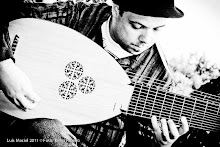
Regina Albanez - Brazilian lutenist | Regina Albanez - Alaudista brasileira

Regina Albanez is recognised as a most dynamic and imaginative performer on the lute, theorbo and baroque guitar. Having studied classical guitar, composition and cello in her native Brazil at the University of Campinas , Sao Paulo , Regina came to The Netherlands to study lute, theorbo and baroque guitar with Toyohiko Satoh at The Royal Conservatory, The Hague . She has participated in masterclasses with Andrew Lawrence-King, Hopkinson Smith and Duo Assad, and has become one of Holland 's most active specialists in early music.
Regina has won a total of nine prizes at the Van Wassenaar Concours for Early Music Ensembles. She performs extensively throughout The Netherlands and in the Oude Muziek Netwerk. In addition to her work in Holland , Regina has performed in early music festivals and concert series throughout the world including Japan , Korea , Europe , North and South America , Scandinavia and Iceland . She has recorded for the radio throughout Europe and on many CDs, one of which was awarded the Diapason d'Or. Regina teaches regularly at courses given in Brazil and Spain . As well as playing on historical instruments, she is also a composer (works edited by G.P.S., San Francisco) and performer of Latin American music. She is also a member of Musica Temprana, La Primavera, Grain de la Voix and Compagnia Vocale.

Source: http://www.lasuavemelodia.com/biographies/regina.html


Regina Albanez playing Canarios from Gaspar Sanz (Spain 1640-1710)

(português)
Regina Albanez é reconhecida como uma executante muitíssimo dinâmica e imaginativa do alaúde, teorba e guitarra barroca. Após ter estudado guitarra clássica, composição e violoncelo no Brasil natal, na Universidade de Campinas - São Paulo, Regina Albanez foi para a Holanda para estudar alaúde, teorba e guitarra barroca com Toyohiko Satoh no Conservatório Real de Haia. Participou de masterclasses com Andrew Lawrence-King, Hopkinson Smith e Duo Assad, e tornou-se numa das maiores e mais ativas especialistas da Holanda em Música Antiga.
Regina ganhou um total de nove prêmios no Concurso Van Wassenaar para emsembles de Música Antiga. Ela toca extensivamente pela Holanda e na rede Oude Muziek. Acrescentado ao seu trabalho na Holanda, Regina Albanez já tocou em festivais de Música Antiga e em séries de concertos por todo o mundo, incluindo o Japão, a Coréia do Sul, Europa, América do Sul e América do Norte, Escandinávia e Islândia. Gravou para rádios por toda a Europa e vários CDs, um dos quais ganhou o "Diapason d'Or". Regina Albanez leciona regularmente em cursos no Brasil e em Espanha. Ao mesmo tempo que toca instrumentos históricos, ela é também compositora (trabalhos editados por G.P.S., São Francisco) e executante de música Latino-Americana. É também parte do Musica Temprana, La Primavera, Grain de la Voix e Compagnia Vocale.

Fonte: http://www.lasuavemelodia.com/biographies/regina.html

Saturday, February 20, 2010

Wikipedia – Collaborative Encyclopedia? | Wikipédia – Enciclopédia Colaborativa?

col•lab•o•ra•tion [kuh-lab-uh-rey-shuh n] –noun
1. the act or process of collaborating 2. a product resulting from collaboration: This dictionary is a collaboration of many minds.

Yesterday, I spent 30 minutes of my time signing up on Wikipedia - an online free "collaborative" encyclopedia and learning the basics in order to contribute to the entries "lute" and "alaúde", putting my blog at the public’s disposal in the informative resources section of the external links.
Unfortunately, I was told by friends from the Ancient Music scene, that my entries on wikipedia were deleted by administrators and I tried to understand why the hyperlink to this blog was deleted. The reasons can be three: or I vandalized Wikipedia, or I spammed, or I violated the policy of neutrality. Well, if the moderator does not know to be neutral, these three reasons are very concerning.
After getting to know over two hundred people in the Early Music of various countries, be them musicians, organizers, teachers and fans, I think I can answer these questions:

To the Wikipedia administrators of the "lute" and "alaúde" sections, which I don’t really know if they know anything about the instruments, live from contributions from people like me that share freely to everyone in the internet. There’s information provided by my personal research on links contained in wikipedia. I get emails with questions about the lute and respond whenever I can, but next time I get a question from a person associated with this free "collaborative" encyclopedia, maybe I will not be able to cooperate. After all, as many have said, Wikipedia does not bring absolute truths. It is only controlled by people who take their administrator position to the extreme, removing useful information in a subjective and petty way, as if through collaboration we were practicing competition or the invasion of a personal fiefdom.

(português)
colaboração [co.la.bo.ra.ção] sf (colaborar+ção)

1 Ato de colaborar; cooperação; ajuda. 2 Trabalho feito pelos colaboradores. 3 Conjunto dos colaboradores. 4 Inform Reunião de duas ou mais pessoas que trabalham juntas para produzir ou utilizar uma aplicação multimídia.

Ontem, gastei 30 minutos do meu tempo a inscrever-me na wikipedia – uma enciclopédia “colaborativa” online e a aprender o básico para poder dar o meu contributo para a entrada “lute” e “alaúde”, colocando o meu blog à disposição do público na secção de recursos informativos em ligações externas.
Infelizmente, fui informado por amigos do cenário da Música Antiga, que as entradas que dei no wikipedia foram apagadas por administradores e procurei entender porque razão o hiperlink a este blog foi apagado. As razões podem ser três: Ou vandalizei a wikipedia, ou fiz spam, ou violei a política de neutralidade. Bom, se o moderador não souber ser neutral, essas três razões são muito relativas.
Depois de travar conhecimento com mais de duzentas pessoas na Música Antiga de diversos países, sejam músicos, organizadores, professores e admiradores, creio que poderei responder a essas perguntas:

Aos administradores da Wikipedia das secções “lute” e “alaúde”, que não sei realmente se sabem alguma coisa sobre os instrumentos, vivem das contribuições de pessoas como eu, que as dispõem livremente a todos na Internet. Há informações providenciadas pelas minhas pesquisas pessoais em hiperligações contidas na wikipedia. Recebo e-mails com perguntas sobre o alaúde e respondo sempre que posso, mas da próxima vez que receber alguma pergunta de uma pessoa ligada a esta enciclopédia “colaborativa”, talvez não possa colaborar. Afinal de contas, como já muita gente diz, a Wikipedia não traz verdades absolutas. É apenas controlada por pessoas que levam a sua condição de administrador ao extremo, suprimindo informações úteis de um modo subjetivo e mesquinho, como se através da colaboração estivéssemos praticando a competição ou a invasão de algum feudo pessoal.

We're now on Wikipedia! | Estamos agora no Wikipédia!

As of today, we're in Wikipedia on "lute" in the external links section at the bottom of the page. Thus, we reach more people with more information and points of view on this beautiful instrument.
We apologize for any errors in the English language on this blog and we are grateful for any suggestions for improving the texts.
http://en.wikipedia.org/wiki/Lute

(português)
A partir de hoje, estamos no Wikipédia em "Alaúde", na parte das ligações externas, no final da página. Esperamos assim poder chegar a mais pessoas com mais informações e pontos de vista sobre este lindo instrumento.
http://pt.wikipedia.org/wiki/Ala%C3%BAde

Tuesday, February 16, 2010

Stockholm Early Music Festival | Festival de Música Antiga de Estocolmo

From 9 to 13 June 2010, framed in the wonderful scenery of Gamla Stan (the old downtown Stockholm), will take place the Early Music Festival in the capital of Sweden.
The event brings together important presences in the world scene of Early Music, as the countertenor sensation of the moment, Philippe Jaroussky (France), Ton Koopman - Unavoidable reference in the interpretation and recreation of Bach's work - and Tini Mathot (Netherlands), the soprano Ida Falk Winland and the Early Stage Baroque Ensemble (Sweden) aswell as the ensemble La Venexiana (Italy), among others.
There will be also masterclasses and interesting workshops with personalities invited to the Festival.
http://www.semf.se/


(português)
De 9 a 13 de Junho de 2010, enquadrado no cenário maravilhoso de Gamla Stan (a velha baixa de Estocolmo), irá se realizar o Festival de Música Antiga da capital da Suécia.
O evento conta com presenças importantes no panorama mundial da música antiga, como o contratenor sensação do momento, Philippe Jaroussky (França), Ton Koopman – Referência incontornável na interpretação e recriação da obra de J.S. Bach - e Tini Mathot (Holanda), a soprano Ida Falk Winland e o Early Stage Baroque Ensemble (Suécia) bem como o ensemble La Venexiana (Itália), entre outros.
Haverão ainda masterclasses e interessantes workshops com individualidades convidadas para o Festival.
http://www.semf.se/

Thursday, February 4, 2010

Rolf Lislevand - Diminuito

In the short intervals of lute classes at EMB, me and my teacher talk about music, composers and musicians. We all have our favorites, those who can move us through the inspiration of their interpretations. But when it comes to Rolf Lislevand, my teacher says, "that guy is a virtuoso."
I was happy when he said that because today I play the lute because I heard two John Dowland songs performed by Julian Bream as a child, and saw Rolf Lislevand on TV, perhaps in 1992, accompanying Montserrat Figueras. In the early 90s, I could say that most of my colleagues wanted to be Axl Rose, Ayrton Senna or Gordon Gekko. I wanted to be Rolf Lislevand.

The Norwegian lutenist, which had already released the album "Nuove Musiche" in 2006, with a touch of modernity and improvisation, as well as masterful musicality, is now launching "Diminuito", accompanied by a different set of musicians and changing the musical basis from early Italian baroque to also Italian renaissance. The result is simply amazing, I recommend it not only for lute fans, but for everyone. When you hear this sound, who knows if you will not feel hopelessly attracted to Early Music.
http://player.ecmrecords.com/lislevand


Photo Credits Roberto Masotti

(português)
Nos pequenos intervalos das aulas de alaúde na EMB, eu e meu professor falamos de música, dos compositores e dos músicos. Todos nós temos os nossos preferidos, aqueles que conseguem mexer conosco através da inspiração das suas interpretações. Mas quando se fala de Rolf Lislevand, o meu professor diz: “esse cara é um virtuoso”.
Fiquei feliz quando ele disse isso porque hoje toco alaúde por ter ouvido duas músicas de Dowland tocadas por Julian Bream quando era criança, e por ter visto Rolf Lislevand acompanhando Montserrat Figueras na TV, talvez em 1992. No início dos anos 90, poderia se dizer que a maioria dos meus colegas queriam ser Axl Rose, Ayrton Senna ou Gordon Gekko. Eu queria ser Rolf Lislevand.

O alaúdista norueguês, que já tinha lançado o álbum “Nuove Musiche” em 2006, com um toque de modernidade e improvisação, além de uma musicalidade magistral, lança agora “Diminuito”, acompanhado de um conjunto de músicos diferente e mudando a base musical do início do barroco italiano para a renascença também italiana. O resultado é simplesmente espantoso, recomendo para não apenas para os fãs do alaúde, mas para toda a gente. Ao ouvir este som, quem sabe se também você não se sentirá irremediavelmente atraído pela Música Antiga.
http://player.ecmrecords.com/lislevand

Wednesday, January 27, 2010

Ziryâb: key figure in the history of the lute | Ziryâb: Figura-Chave da história do alaúde

Abu al-Hasan 'Ali ibn Nafi' (789-857) was a singer and lutenist who gained fame in the capital of the Caliphate, Baghdad, and also at the court of the Cordoba Emirate, in Al-Andalus (Iberian Peninsula). His nickname was Ziryâb, or Blackbird, for having dark skin and the gift of singing. Ziryâb was born in what is nowadays Iraq, and according to several sources, he was a freed slave of Persian origin, or was born into a family of slaves. Relatively early in his life, he was "invited" to leave Baghdad due to the jealousy and threats of his own teacher, who felt threatened by the talent of his student at the Caliphal Court. He settled in Egypt and Kairouan, Tunisia, where the local sovereign gave him ideal conditions to study the local music.
In Cordova there was admiration for the Court of Baghdad and Sâmarrâ. Knowing this, Ziryâb sent a letter to the Emir Al-Hakam in Cordova, offering his services. Hired by the Emir, who died during his trip to Al-Andalus, the Iraqi lutenist was surprisingly appointed chief of the Palace singers by the new Emir, who also gave him a sumptuous house to reside.
It's almost unbelievable how history forgot this character, which in my personal view may have had to do with the madness of the Holy Inquisition centuries later, that virtually wiped the traces of this brilliant cultural civilization. Ziryâb alone transformed the culture of Al-Andalus, becoming the most influential man of the time in that European region. He founded a Music Conservatory in Cordoba that did not look at the social classes and gender differences. He introduced new musical instruments and an innovative form of musical notation. Ziryâb was famous for being the greatest lutenist of the time, having even modified the Oud (Arabic lute) with the inclusion of a fifth string.
This fascinating historical figure not only had influence in Music and in the entry of the lute in Europe, but he also was responsible for introducing the game of Chess in the West, for the introduction of new fashions in clothing and hairstyle, for innovations in etiquette, cooking, and also personal hygiene.

Sources: Moorish Architecture in Andalusia – TASCHEN books
Other internet sources


(português)
Abu al-Hasan ‘Ali ibn Nafi’ (789-857) foi um cantor e alaúdista que ganhou fama na capital do Califado, Baghdad, e também na Corte do Emirado de Córdova, no Al-Andalus (Península Ibérica). Seu apelido era Ziryâb, ou melro, por ter pele escura e o dom do canto.
Ziryâb nasceu no que hoje é o Iraque, e segundo diversas fontes, seria um escravo liberto de origem persa, ou teria nascido numa família de escravos. Relativamente cedo na sua vida, foi “convidado” a abandonar Baghdad devido à inveja e ameaças de seu próprio professor, que se sentia ameaçado pelo talento do seu aluno na Corte Califal. Instala-se no Egipto e Kairouan, na Tunísia, onde o soberano local lhe dá condições para estudar a música local.

Em Córdova havia admiração pela Corte de Baghdad e Sâmarrâ. Sabendo disso, Ziryâb enviou uma carta ao emir Al-Hakam de Córdova, oferecendo os seus serviços. Contratado pelo emir, que faleceu durante a sua viagem até Al-Andalus, o alaúdista iraquiano foi surpreendentemente nomeado chefe dos cantores do Palácio pelo novo Emir, que ainda lhe forneceu uma sumptuosa casa para residir.

Chega a ser inacreditável como a história esqueceu esta personagem, o que na minha visão pessoal poderá ter tido a ver com a loucura da Santa Inquisição, alguns séculos mais tarde, que virtualmente limpou os vestígios culturais dessa brilhante civilização. Ziryâb transformou sozinho a cultura de Al-Andalus, tendo sido o homem mais influente da época nessa região europeia. Fundou em Córdova um Conservatório de música que não olhava a classes sociais e diferenças de sexo. Introduziu instrumentos novos e uma forma inovadora de notação musical. Ziryâb era famoso por ser o mais brilhante alaúdista da época, tendo inclusivamente modificado o Oud (alaúde árabe) com a inclusão de uma quinta corda.
Esta figura histórica fascinante não teve apenas influência no meio musical e da entrada do alaúde na Europa, mas também foi responsável pela entrada do jogo de Xadrez no Ocidente, pela introdução de novas modas de vestuário e penteado, por inovações na etiqueta, culinária, e também na higiene pessoal.

Fontes: Moorish Architecture in Andalusia – TASCHEN books
Outras fontes da internet

Friday, January 22, 2010

Hagen & Falckenhagen & Scheidler: The Court of Bayreuth [CD]

Works by Adam Falckenhagen (1697-1754), Christian Gottlieb
Scheidler (1752-1815) and Joachim Bernhard Hagen (1720-1787)

Miguel Yisrael – Baroque Lute

Release Date: February 1, 2010


(português)
Peças de Adam Falckenhagen (1697-1754), Christian Gottlieb Scheidler (1752-1815) e Joachim Bernhard Hagen (1720-1787)

Miguel Yisrael – Alaúde Barroco

Data de lançamento: 1 de Fevereiro de 2010

Thursday, December 24, 2009

Merry Christmas and a Happy New Year | Feliz Natal e Feliz Ano Novo

To all my relatives and friends, and in a very special way to all visitors from every corner of the world who have followed my incursions through Lute Music, I wish you all

MERRY CHRISTMAS and a HAPPY NEW YEAR
with peace and joy to everyone of you


(português)
Para todos os meus familiares e amigos e, de uma forma muito especial aos visitantes de todos os cantos do mundo que têm seguido as minhas incursões pela música de alaúde, eu vos desejo a todos

FELIZ NATAL e um FELIZ ANO NOVO
com paz e alegria para todos vós

Wednesday, December 2, 2009

Introducing the Theorbo | Apresentando a Teorba

The end of this semester was difficult. It is a complicated exercise to find motivation and inspiration to continue to study a very difficult instrument with so many demanding theory subjects, but so is the structure of an instrument course of a major music school.
In a way, I had placed my instrument aside to prepare for the theory exams, with the will that the year would be over soon and that the holidays would give me the necessary impetus to start the next semester with energy. This energy has just arrived in a way that I was not expecting.

My teacher brought the theorbo in the last class, so I get used to the instrument to begin classes in February. The learning of this "new" instrument in conjunction with the Renaissance lute is actually beneficial to the general training as a lutenist.
The feeling of playing a theorbo is fantastic and the surrounding sound is immediate, the difference in sound to the Renaissance lute making much impact. I cannot wait for the next semester and all the musical possibilities that this new bass baroque lute brings.

Read more about the theorbo in the post from 1 October 2009 - What's the Theorbo What is a theorbo?


A song for Countertenor (Phillipe Jaroussky) and Theorbo (Björn Colell)

(Português)
O final do presente semestre foi difícil. É um exercício complicado encontrar motivação e inspiração para continuar a estudar um instrumento dificílimo com tantas cadeiras teóricas exigentes, mas é assim a estrutura de um curso instrumental de uma grande escola de música.
De certa maneira, eu já tinha colocado o meu instrumento de lado para me preparar para as provas teóricas, com vontade que o ano acabasse logo e que as férias me dessem o estímulo necessário para começar o próximo semestre com energia. Essa energia acabou de chegar de uma forma que eu não estava à espera.

O meu professor trouxe a Teorba na última aula, para que eu me habituasse ao instrumento para começar as aulas em Fevereiro. A aprendizagem deste “novo” instrumento em simultâneo com o alaúde renascentista é até benéfico para a formação geral como alaúdista.
A sensação de tocar uma teorba é fantástica e a envolvência do som é imediata, fazendo muito impacto a diferença de alcance sonoro para o alaúde renascentista. Mal posso esperar pelo próximo semestre e por todas as possibilidades musicais que este novo alaúde baixo barroco trás.

Leia mais sobre a Teorba no post de 1 de Outubro de 2009 – What’s a Theorbo O que é uma Teorba?

Wednesday, November 4, 2009

Tribute to Pedro Caldeira Cabral | Homenagem a Pedro Caldeira Cabral

This post is not a biography of the brilliant portuguese guitarist, composer and author. It's just a tribute and a reminder to me that without having known his music, I would never have been attracted by Early Music and become a lute student.

Unfortunately I never had the opportunity to attend a concert or watch a presentation of his Early Music projects "La Batalla" and "Concerto Atlântico", perhaps because of the poor dissemination of information on quality music in my native country. But I would also like to link this blog to those musicians, who probably deserved more attention and greater support by the Portuguese media and the Ministry of Culture.

I can not remember exactly how I met Pedro Caldeira Cabral's music. Certainly I must have seen him play on television once or twice and memorized his name before I was ten years old. I know that in a Christmas when I was a kid, I bought a cassette of his "Duas faces" album. I must have heard that tape a thousand times. I would say that in the mid-80s, most of my colleagues wanted to be Bono of U2, Maradona or Ayrton Senna. I wanted to be Pedro Caldeira Cabral.

My admiration was further completed in 2007, when in my enthusiasm for initiating lute studies, I contated him by email, among about fifty contacts around the world in the field of Early music, from musicians and teachers to webmasters and record companies. Pedro Caldeira Cabral was the only person who answered me, in a very attentive and friendly way, I must say. I will never forget this gesture and the day of my graduation recital I intend to include his name on my short list of thanks, perhaps play one of his songs on the Renaissance lute or vihuela.


(Português)
Este post não é uma biografia sobre o brilhante guitarrista, compositor e autor português. É apenas uma homenagem e um lembrete para mim de que sem ter conhecido a sua música, eu nunca teria sido atraído pela música antiga e me tornado um estudante de alaúde.

Infelizmente nunca tive oportunidade de assistir a um recital ou ver uma apresentação dos seus projectos de música antiga “La Batalla” e “Concerto Atlântico”, talvez pela pobre difusão de informações sobre espectáculos de música de qualidade no meu país natal. Mas gostaria de ligar este blog também a esses músicos, que talvez merecessem uma atenção e um apoio maior por parte dos meios da comunicação social portuguesa e do Ministério da Cultura.

Não me consigo lembrar com exatidão como conheci a música de Pedro Caldeira Cabral. Com certeza devo tê-lo visto tocar na televisão uma ou duas vezes e fixei o seu nome quando ainda não tinha dez anos de idade. Sei que num Natal em que eu era pequeno, me compraram uma cassete do seu álbum “duas faces”. Devo ter ouvido aquela cassete milhares de vezes. Eu diria que em meados dos anos 80, a maioria dos meus colegas queria ser Bono dos U2, Maradona ou Ayrton Senna. Eu queria ser Pedro Caldeira Cabral.

A minha admiração ainda se completou mais no ano de 2007, quando no entusiasmo pela minha iniciação no alaúde o contactei por email, entre cerca de cinquenta contactos pelo mundo na área da Música Antiga, desde músicos e professores a webmasters e companhias discográficas. Pedro Caldeira Cabral foi a única pessoa que me respondeu, de uma forma muito atenciosa e simpática por sinal. Nunca esquecerei esse gesto e no dia do recital da minha formatura pretendo incluir o seu nome na minha pequena lista de agradecimentos, quiçá tocar uma das suas músicas no alaúde renascentista ou vihuela.