Tuesday, May 19, 2009

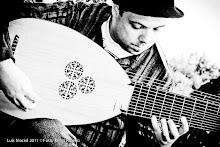
EDIN KARAMAZOV – The Lute is a Song

Edin Karamazov is a Bosnian lutenist (born in 1965 in Zenica). He studied with Hopkinson Smith at the Schola Cantorum Basiliensis and worked with various musical projects, soloists and groups, including Sting, Hespèrion XXI and Andreas Scholl.

Edin Karamazov stands out for its artistic and a wide-ranging approach, bringing to his archlute, works composed for other instruments, such as the "Nocturne" by Benjamin Britten and the “Partita in D Minor” by Johann Sebastian Bach. However, it was with his collaboration with the pop star Sting who gained wider projection, in the album "Songs from the Labyrinth" - Renaissance Music by John Dowland with the less erudite voice of Sting.

Edin Karamazov is now launching a solo CD for Decca, titled "The lute is a song." As in his previous recordings, the lutenist offers a differentiated approach on the traditional music for lute, taking the instrument out of the purist environments and embracing other musical genres, which in my view refreshes the entire landscape of lute music, sometimes criticized for being dull, thus keeping the instrument alive and interesting, while gaining more audiences.

"The lute is the song" includes music from the Renaissance to nowadays, classical but with a folk and pop touch, beginning with an unusual electric guitar music (Paisaje Cubano con rumba) by Leo Brouwer and including the participation of four of the most important voices of the world, Andreas Scholl, Renée Fleming, the Macedonian singer Kaliopi and Sting.
Among the songs chosen for the CD, is a fabulous interpretation of the famous “Toccata and Fuga in D minor” by Johann Sebastian Bach. Included is also a version of the Turkish Koyunbaba by Carlo Domeniconi in baroque lute and a Zamboni sonata for the more conservative public.

This is one of the best CDs I ever heard in my life and that will stir emotions in you, just listen to "Oh Lord, whose Mercies are numberless" by Händel with Edin Karamazov’s archlute and the incredible voice of the countertenor Andreas Scholl and you will receive the perfect absolution.


(português)
Edin Karamazov é um alaúdista bósnio (nascido em 1965 em Zenica). Estudou com Hopkinson Smith na Schola Cantorum Basiliensis e trabalhou com diversos projectos musicais, solistas e agrupamentos, incluindo Sting, Hespèrion XXI e Andreas Scholl.

Edin Karamazov destaca-se por sua abordagem artística bem mais abrangente, trazendo para o seu arquialaúde obras compostas para outros instrumentos, como são exemplos o “Nocturno” de Benjamin Britten e a partita em Ré Menor de Johann Sebastian Bach. No entanto, foi com a sua colaboração com a estrela pop Sting que ganhou bastante projeção, no álbum “Songs from the Labyrinth” – Música renascentista de John Dowland com a voz menos erudita de sting.

Edin Karamazov lança agora um CD solo pela DECCA, entitulado “The lute is a song”. Como no seu anterior registo discográfico, o alaúdista apresenta uma abordagem diferenciada sobre a tradicional música para alaúde, tirando o instrumento dos ambientes puristas e abraçando outros gêneros musicais, que no meu entender refresca toda a paisagem musical do alaúde, por vezes criticado de monótono, mantendo assim o instrumento vivo e interessante, enquanto conquista maiores audiências.

“The lute is a song” engloba música desde o Renascimento aos dias de hoje, clássico mas com um toque folk e pop, começando logo com uma invulgar música em guitarra elétrica (paisaje Cubano com rumba) de Leo Brouwer e incluindo a participação de quatro das mais importantes vozes do mundo, Andreas Scholl, Renée Fleming, a cantora macedônia Kaliopi e Sting.
Entre as músicas escolhidas para o CD, está uma fabulosa interpretação da famosa Toccata e Fuga em Ré menor de Johann Sebastian Bach. Incluídas estão também uma versão em alaúde barroco da Koyunbaba turca de Carlo Domeniconi e uma sonata de Zamboni para o público mais conservador.
Este é um dos melhores CDs que já ouvi na minha vida e que com certeza o irá emocionar, ouça “Oh Lord, whose mercies are numberless” de Händel com o arquialaúde de Edin Karamazov e a voz inacreditável do contratenor Andreas Scholl e receberá a perfeita absolvição.

Thursday, May 14, 2009

Greensleeves by Moonlight | Greensleeves ao Luar

During this week, the full moon appeared before the semi-clouded sky, and the first image that came to my mind while seeing that amazing phenomenon, was the "Queen of the Night" from Mozart’s "Magic Flute", especially in the “Amadeus” movie.

And what if the stage was the silent earth without human hurry, and the universe was watching, behind the curtain-clouds and the moon, stars, galaxies!

A few years ago, while the world was sleeping, I used to seize the huge moonlight that stood in front of my window in Lisbon, lighting up the Tagus River, awaking and playing the adagio sustenuto of Beethoven’s Moonlight Sonata. The combination of divine music with the hypnotic natural phenomenon, although obviously by the title of the piece, was so powerful. And thus I would let myself be bewitched by that sweet tide, as a galleon through dawn...

Thus, yesterday I played the lute for this sublime theatre, and in a mysterious way my fingers played with feeling even those songs which are still a challenge, as if the energy of the night, silent and amazing, was tutor of my fingers on the instrument.

(português)
Durante esta semana, a Lua cheia apareceu diante do céu semi-enevoado, e a primeira imagem que me veio à cabeça ao ver esse incrível fenômeno, foi a “Rainha da noite” da “Flauta Mágica” de Mozart, sobretudo no filme “Amadeus”.

E se o palco fosse a terra silenciosa sem azáfama humana, e o universo estivesse assistindo, atrás das nuvens-curtinas e da Lua, estrelas, galáxias!

Há uns anos, enquanto o mundo dormia, eu aproveitava o Luar gigantesco que se erguia em frente da minha janela, em Lisboa, iluminando o Rio Tejo. Levantava-me e tocava o adágio sustenuto da Sonata ao Luar de Beethoven. A combinação da música divina com o hipnótico fenômeno natural, embora óbvia pelo titulo da peça, era poderosíssima. E assim eu me deixava levar enfeitiçar por aquela doce maré, como um galeão pela madrugada...

Foi assim que ontem toquei alaúde para esse sublime teatro, e de forma misteriosa os meus dedos tocaram com o sentimento mesmo aquelas músicas que ainda são um desafio, como se a energia da noite, silenciosa e espantosa, fosse tutora dos meus dedos sobre o instrumento.

Sunday, May 10, 2009

The OUD, father of the European Lute | o OUD, pai do alaúde europeu

In the year of 711, a line of highly advanced Muslims invaded the poorly defended Iberian Peninsula and established the Caliphate of Al-Andalus.
The Arabs, among many things, established in the peninsula the taste for arts and the erudite cult of a musical instrument called "oud" ("Ud" in some countries) that later would originate the European lute. They were also the first to establish a music conservatory in Spain by the virtuoso of that time, Zyriab.

As the picture shows, this instrument also has a half-pear shape and to date is commonly used in music of the Middle East and Eastern Mediterranean countries. It differs from the European lute for not having frets (traces on the neck of the instrument) and because it is played with a plectrum (pick).

The oldest image of an Oud dates back to 5000 years ago, in the current city of Nassiriyah in Iraq. This detail caused me enormous impact, because it is possible to imagine the ancient civilizations of the Middle East and Mediterranean already using chordophones (string instruments) in their music. From the Sumerians, Acadians, Persians, Babylonians, Assyrians, Armenians, Greeks, Egyptians and Romans, to the Turks, who later brought the Oud to the battles, by the belief in the magical powers of this instrument.


(português)
No ano de 711, uma linhagem de muçulmanos extremamente avançados invadiu a Península Ibérica mal defendida e estabeleceu o Califado de Al-Andalus.
Os árabes, entre muitas coisas, estabeleceram na Península o gosto pelas artes e o culto erudito de um instrumento musical chamado “oud” (“Ud” em alguns países) que mais tarde daria origem ao alaúde europeu. Foram também os primeiros a estabelecer em Espanha um conservatório de música através do virtuoso da época, Zyriab.

Como a imagem mostra, este instrumento também tem formato de meia-pêra e até aos dias de hoje é comumente usado na música do Médio Oriente e países do Mediterrâneo Oriental. Distingue-se do alaúde europeu por não ter trastes (traços no braço do instrumento) e por ser tocado com palheta.

A imagem mais antiga de um Oud remonta a 5000 anos atrás, na atual cidade de Nassiriyah no Iraque. Esse detalhe causou-me enorme impacto, pois é possível imaginar as civilizações da Antiguidade no Médio Oriente e Mediterrâneo já usando cordofones (instrumentos de corda) na sua música. Dos Sumérios, Acadianos, Persas, Babilônios, Assírios, Armémios, Gregos, Egípcios e Romanos até aos Turcos, que mais tarde traziam o Oud para as batalhas, pela crença nos poderes mágicos desse instrumento.

Thursday, April 30, 2009

My album of the mornings | Meu album das manhãs

I am a lover of ethnic music and have a special taste for music that goes from the cultures of the Mediterranean Basin to India, mainly from Turkey to Pakistan, Passing through ancient Persia.
Although my collection of ethnic music is still minimal, mainly of music related to the lute, I highlight an album that I like to hear after waking or during the morning:
"Rhythms OF Baghdad" by Ahmed Mukhtar and Sattar Al-Saadi. It is a wonderful disc, profound, of fusion between an immensely expressive Oud* and an incredible percussion, which leads us to the ancient bazaars, mosques and tea houses of Baghdad, leaving us a little glimpse of the cultural aspects of Iraq, where the musicians are native.

Born in the Iberian Peninsula, in an ancient and great city, whose narrow streets, a thousand years ago could be confused with any city in the Abbasid period, I can’t but feel the depth of this disc. The musicians, from the glorious capital of that vast disappeared empire, accurately capture my personal vision of the territory of Al-Andalus, governed by a highly advanced line of Muslims, which after all, brought the art to this land as we know it today.

I awake and look at the landscape, the sun warms me and "rhythms of Baghdad" transports me to a world where everything is possible, to live together and share the best of the human spirit among all world cultures without being pulled to one side of the barricade of the current intolerance between peoples.

* The Oud is the "father" of the European lute, an instrument from the Middle East, illustrated in the cover of "Rhythms of Baghdad" and that will be the theme of the next entry in this blog.

(português)
Sou um amante de música étnica e tenho um gosto especial pela música que vai das culturas da Bacia do Mediterrâneo até à Índia, sobretudo da Turquia ao Paquistão, passando pela antiga Pérsia.
Embora a minha coleção de música étnica ainda seja mínima, principalmente da música ligada ao alaúde, destaco um álbum que gosto de ouvir depois de acordar ou então durante a manhã:
“RHYTHMS OF BAGHDAD” de Ahmed Mukhtar e Sattar Al-Saadi. É um disco maravilhoso, profundo, de fusão entre um Oud* imensamente expressivo e uma percussão inacreditável, que nos leva aos antigos bazares, mesquitas e casas de chá de Baghdad, deixando-nos vislumbrar um pouco dos aspetos culturais do Iraque, de onde os músicos são nativos.

Nascido na Península Ibérica, numa antiga e grande cidade, cujas ruas estreitas, há mil anos se confundiriam com qualquer cidade do período abássida, não posso deixar de sentir a profundidade deste disco. Os músicos, originários da gloriosa capital desse vasto império desaparecido, captam com precisão a minha visão pessoal do território de Al-Andalus, governado por uma linha de muçulmanos altamente avançados, que no final das contas, trouxeram a arte para essa terra como a conhecemos hoje.

Acordo e olho a paisagem, o Sol aquece-me e “rhythms of Baghdad” transporta-me para um mundo onde tudo é possível, conviver e partilhar o melhor do espírito humano entre todas as culturas mundiais sem sermos puxados para um dos lados da barricada da atual intolerância entre povos.

*o Oud é o “pai” do alaúde europeu, instrumento originário do Médio Oriente, ilustrado na capa do “Rhythms of Baghdad” e que será tema da próxima entrada neste blog.

Thursday, April 23, 2009

EL CORTESANO - "Si me llaman..." Presentation Concert | Concerto de apresentação


EL CORTESANO invites you to the presentation concert of their latest album, "Si me llaman ..." The presentation will take place on Saturday April 25, at 20hs, in the auditorium of Caja Madrid, located in the building of the Casa de las Alhajas (just opposite the monastery of Las Descalzas in the Plaza San Martín) and you can enter through a side street, Hileras, Madrid.

www.elcortesano.com

Personal note: If you are anywhere inside a 2.000km radius of this event, please do yourself a favor and do not miss it! Pick a bus or a fast train, Madrid has excellent transport connections


EL CORTESANO Si la noche haze oscura

(português)
EL CORTESANO convida-o/a para o concerto apresentação do seu último álbum, "Si me llaman ..." A apresentação terá lugar no sábado, dia 25 de abril às 20hs, no auditório da Caja Madrid, localizado no edifício da Casa de las Alhajas (em frente ao Mosteiro de las Alhajas, na Plaza San Martín) e entra-se por uma rua lateral, Hileras, Madrid.

www.elcortesano.com

Nota pessoal: Se você estiver algures dentro de um raio de 2,000km deste evento, por favor faça um favor a si próprio/a e não perca! Use o “autobus” ou o comboio rápido, Madrid têm excelentes ligações de transporte.

Wednesday, April 22, 2009

Weiss at J.S. Bach’s house | Weiss em casa de J.S. Bach

Sylvius Leopold Weiss, the most famous lutenist of Europe, and Johann Sebastian Bach, with all probability already knew each other by name even before they met. One of Bach’s sons, Wilhelm Friedemann, became organist of Sophienkirche of Dresden in 1733, where he made friends with Weiss. From that point on, Bach and Weiss must have met several times.

During 1739, Weiss and his main apprentice, Johann Kropfgans, stayed in Leipzig with Wilhelm Friedemann for four weeks, and visited the house of J.S. Bach frequently. Johann Elias Bach, who worked as private secretary to Bach mentions the visit in a letter to the "Cantor" J.W. Koch:

"….so I certainly hoped to have the honour of speaking to my brother; I wished it all the more because just at that time there was extra special music while my cousin from Dresden (Wilhelm Friedemann) who was present here for four weeks, together with the two famous lutenists, Herr Weiss and Herr Kropfgans, played at our house several times…."

It is known that J.S. Bach had a great taste for the lute, and based on his close relationship with a circle of professional and amateur lutenists of the time, he modified an harpsichord placing gut-strings in the manner of the lute, which became known as a "Lautenwerk". It was said that the sound heard could cheat the best lutenists, and it was the instrument in which Bach played Weiss’s sonatas. Bach’s music for lute, composed in this lute-harpsichord, is for this reason, technically difficult, and sometimes require a different tuning.

Testimony of the admiration that Bach had for Weiss was the arrangement that Bach made of Weiss’s Sonata No. 47 in A Major for his suite for harpsichord and violin - BWV1025, which may have originated from one of these historic meetings.

Fifty-five years after the deaths of J.S. Bach and Weiss, in 1805, J.F. Reichart reported that J.S. Bach and Weiss have been involved in a friendly challenge ...

"Anyone who knows how difficult it is to play harmonic modulations and good counterpoints on the lute will be surprised and full of disbelief to hear from eyes-witnesses that Weiss, the great lute-player, challenged JS Bach, the great harpsichord and organ-player, by playing fantasies and fugues."


(português)
Sylvius Leopold Weiss, o alaúdista mais famoso da Europa, e Johann Sebastian Bach, com toda a probabilidade já se conheceriam de nome mesmo antes de se encontrarem. Um dos filhos de Bach, Wilhelm Friedemann, tornou-se organista da Sophienkirche de Dresden em 1733 onde travou amizade com Weiss. A partir desse ponto, Bach e Weiss deverão ter-se encontrado por diversas vezes.

Durante 1739, Weiss e seu principal aprendiz, Johann Kropfgans, estiveram com Wilhelm Friedemann em Leipzig por quatro semanas, tendo visitado a casa de J.S. Bach freqüentemente. Johann Elias Bach, que trabalhava como secretário privado de Bach menciona a visita numa carta ao “Cantor” J.W.Koch:

"... por isso eu certamente esperava ter a honra de falar com o meu irmão; eu desejava isso ainda mais porque justo durante esse tempo havia música extra especial enquanto o meu primo de Dresden (Wilhelm Friedemann) que estava presente aqui por quatro semanas, junto com os dois famosos alaúdistas, Senhor Weiss e Senhor Kropfgans, tocaram na nossa casa várias vezes...”

É sabido que J.S.Bach tinha um grande gosto pelo alaúde, e baseado no seu relacionamento estreito com um circulo de alaúdistas profissionais e amadores da época, chegou a modificar um cravo colocando cordas de tripa à maneira do alaúde, que ficou conhecido como “Lautenwerk”. Dizia-se que o som enganava o ouvido até dos melhores alaúdistas, e era o instrumento onde Bach tocava as sonatas de Weiss. A música de Bach para alaúde, composta neste cravo-alaúde, é por essa razão, tecnicamente difícil, sendo por vezes necessária uma afinação diferente.

Testemunho da admiração de Bach por Weiss foi o arranjo que Bach fez da Sonata nº47 em Lá Maior de Weiss para a sua suíte para cravo e violino, BWV1025, que poderá ter tido a origem num desses encontros históricos.

Cinqüenta e cinco anos depois da morte de J.S.Bach e Weiss, em 1805, J.F.Reichart relata que J.S.Bach e Weiss se terão envolvido num desafio amigável...

"….Alguém que saiba o quanto é difícil tocar modulações harmônicas e bom contraponto no alaúde ficará surpreendido e incrédulo ao ouvir com olhos-testemunha que Weiss, o grande alaúdista, desafiou J.S.Bach, o grande cravista e organista, a tocar fantasias e fugas.”

Friday, April 10, 2009

The nervousness of a recital | O nervosismo de um recital

Last year I made my first appearance in public, that didn’t go well and my confidence was shaken for some time.
The songs were easy, of those that I played with my eyes closed while watching comedy on TV, but with the presentation time approaching I started to get anxious. It was alright, because our Early Music group would play some songs first from "Cancioneiro Musical de Belém” – Portuguese Music from the end of the Fifteenth Century.

In about 20 minutes to the start of the presentations, I received the recital programme and there was my name and title of the songs that I was going to play. But according to the programme, I would play alone before playing with the Early Music group. Anxiety turned into nervousness. And the people who were coming to see me? Seemed like they would never appear, so I went running to the park to see if they were coming. My time was approaching, the heat inside the small room with about 40 people was unbearable, and I, the only student that day dressed in choir boy uncomfortable clothes, began to sweat uncontrollably.

My turn came, and the teacher, proudly announced that directly from Lisbon-Portugal I would play for them. As sweat slided down my face, I thought I could not fail, there I had to be the Jimmy Hendrix of the lute, nothing less.

There was no problem facing the eyes of those 40 people and other colleagues fixed on me, but for my bad luck, my left hand declared independence and began to tremble, and I went down as Titanic, with that Jedi mental strength holding the itching from the sweat in my face.

Some weeks passed and I began to feel uncomfortable to have stopped before a difficulty. I decided to face the "panic" of playing in public. Reflecting on the students’ recital, I discovered in me some flaws and natural inadequacies of someone who is still in the first half of the lute course. Moreover, it was the first time in several years that I played in public and that chair where I sat, was a lonely place.

I came to the conclusion that I was not concentrated in the music, but on what people were thinking. It is interesting to notice that when the hand trembles a bit, we tend to give importance to this factor and so it starts trembling more. In that way, we get more nervous in a chain reaction that has disastrous results. It would help relax doing some breathing exercises to help reduce the level of anxiety and not try to be a virtuoso. Not make a "traffic fine" face when something goes wrong, because often the public doesn’t realize.
I noticed that when we perform, we must play songs from last semester, because we have more security and when we get "turbulence" in the hand, we can always turn the "auto-pilot" on, which was formed during the long hours of study.

I talked with other colleagues in the Early Music Nucleus on the nervousness of a recital and noticed that everyone passed through the same situation. However, for everybody it was essential to play more often in public to dissipate the nervousness. The ideal was to do open rehearsals to students and friends, playing at home for family members, because skipping that stage is often a cause of paralyzing nervousness before the audience. It’s a very important exercise, because we notice how our body reacts and we can find some factors that may increase the nervousness, which are usually natural and we must learn to live with them and not turn them into boogeymen.

For Eternity: " The secret of success is going from failure to failure without loss of enthusiasm. - Winston Churchill


(português)
No ano passado fiz a minha primeira apresentação em público, que não correu bem e a minha confiança ficou abalada durante algum tempo.
As músicas eram fáceis, daquelas que eu tocava de olhos fechados enquanto via comédia na TV, mas com o aproximar da hora da apresentação comecei a ficar ansioso. Tudo bem, pois o nosso grupo de música antiga ia apresentar-se primeiro para tocar músicas do “Cancioneiro Musical de Belém” – Música portuguesa dos finais do século XV.

A uns 20 minutos para o início das apresentações, recebi a programação do recital e lá estava o meu nome e o título das músicas que eu iria apresentar. Mas segundo a programação, eu tocaria sozinho antes de tocar com o grupo de música antiga. A ansiedade transformou-se em nervoso. E as pessoas que me vinham ver? Nunca mais apareciam, tanto que cheguei a correr até ao estacionamento para ver se estavam a chegar. A minha vez aproximava-se, o calor dentro da pequena sala com umas 40 pessoas era insuportável e eu, o único aluno naquele dia vestido com roupa desconfortável de menino de coro, comecei a transpirar incontrolavelmente.

Surgiu a minha vez, e o professor, orgulhoso, anuncia que directamente de Lisboa-Portugal eu iria tocar para eles. Enquanto o suor me corria pela cara, eu pensava que não poderia falhar, eu tinha de ser ali o Jimmy Hendrix do alaúde, nada menos.

Não foi problema enfrentar o olhar fixo daquelas 40 pessoas e de outros colegas meus fixados em mim, só que para meu azar a minha mão esquerda declarou independência e começou a tremer, e eu fui a pique como o Titanic, com aquela força mental de Jedi a agüentar a comichão daquela transpiração na minha cara.

Algumas semanas se passaram e comecei a sentir aquele desconforto de ter parado perante uma dificuldade. Resolvi enfrentar o “pânico” de tocar em público. Refletindo sobre o recital dos alunos, descobri em mim falhas e desajustamentos próprios de quem ainda está na primeira metade do curso de alaúde. Além do mais, era a primeira vez em alguns anos que tocava em público e aquela cadeira onde me sentei, era um local solitário.

Cheguei à conclusão que eu não estava concentrado na música, mas no que as pessoas estariam a pensar. É curioso que quando reparamos que a mão está a tremer um pouco, temos tendência a dar importância a esse factor e assim ela passa a tremer mais. Por isso, ficamos mais nervosos num efeito em cadeia que tem resultados desastrosos. Ajudaria descontrair com alguns exercícios respiratórios para ajudar a reduzir o nível de ansiedade e não procurar ser um virtuoso. Não fazer aquela cara de “multa de trânsito” quando algo corre mal, pois muitas vezes o público não se apercebe.
Percebi também que quando nos apresentamos devemos tocar músicas do semestre passado, pois temos mais segurança e quando houver “turbulência” na mão, podemos sempre ligar o “piloto-automático” que se formou durante as longas horas de estudo.

Falei com outros colegas do núcleo de música antiga sobre o nervosismo de um recital e percebi que todos passam pela mesma situação. No entanto, para todos era essencial tocar mais vezes em público até o nervoso se dissipar. O ideal era fazer ensaios abertos a alunos e amigos, tocar em casa para familiares, pois queimar essa etapa é muitas vezes uma causa de nervosismo paralisante em palco. É um exercício muito importante, pois vamos notando como o corpo reage e podermos aperceber-nos de alguns fatores que possam estar a aumentar o nervosismo, que normalmente são naturais e que temos de aprender a conviver com eles e a não transformá-los em bichos papões.

Para a Eternidade: “O segredo do sucesso é andar de revés em revés sem perder o entusiasmo”. – Winston Churchill

Wednesday, March 25, 2009

Brief history of the Lute | Breve história do Alaúde


The european lute was born from the modification of an Arabic instrument called 'ud (al'ud), which is still popular in Arab countries nowadays. Al'ud means "the wooden one", which probably was used to distinguish it from other instruments made of other materials. The 'ud was introduced in Europe during the Moorish occupation of the Iberian Peninsula (711-1248 -> Portugal / 711-1492 -> Spain). Some sources believe that it may have entered Europe through the Byzantines in Sicily, or crusaders from the Holy Land, however, the european iconography of the period shows Islamic lutenists in the ninth and tenth Centuries aswell as the famous lutenist “Ziryab” in the court of ‘Abd al Rahman II (822-852) in Andalucia.

During the medieval period, the lute, which had 5 pairs of strings, or courses, was played with a quill as the 'ud, which limited the type of music that could be played and so, the lute was often played together with other instruments, especially to accompany songs. However the use of the 'ud was not restricted to Muslims as shown in illustrations of the "songs of Santa Maria" of Alfonso X the Wise (1221-1284). In the fourteenth Century, a new special writing for lute music was invented, called tablature, in which are given the positions of the fingers. Four main types of tablature were developed: the German, whose creator was Conrad Paulmann, the French, Italian and Spanish. With the new writing and the fingertips technique, an opportunity was created to make arrangements of vocal music (mostly polyphonic). There were so many arrangements that soon lutenists were able to create music generated in their own minds, thus creating a new music: The instrumental music for lute. However, that wouldn’t be possible without the close cooperation of lute manufacturers. We can highlight the most important ones of the period: Laux Maler, Hans Frei, Nicola Sconvelt, Magno Tieffenbrucker and Michael Hartung.
Another important factor in spreading the music of instrumental lute was the publishing of works of great masters by the hands of Ottaviano Petrucci, Antonio Gardano and Girolamo Scotto.

The lute really started to be important at the end of the fifteenth Century, when it was realized that it could be played with fingertips instead of a quill. This meant that the music composed in parts could now be played on the instrument. With the addition of a sixth bass course (pair of strings), the development of a more elegant and elongated body shape and the invention of a tablature system for musical notation, the lute reached its classical perfection and the stage was mounted to a music scene that would last more than 150 years. It is not difficult to see the appeal of the instrument. Lightweight and portable, a much cheaper and easier instrument to maintain than keyboards, it was very versatile - it was used for playing dance music, popular tunes, arrangements of vocal music and accompanying songs, and soon generated a solo repertoire of its own, in form of preludes, passemezzi and the most refined fantasies. It was considered the heir to the Roman Cithara or lira, which gave him even more fame in an era of obsession with classical literature.
Above all, it was the enchanting sound of the lute that turned it so admired. While its format is close to the modern guitar, the sound is very different. The resonance of its body in a half-pear and the less stressed strings give the lute a delicacy and richness that can not be compared with the modern guitar. It is in essence an instrument closer to nature than the modern guitar. The main genres of music from the Renaissance period are the dance, the forms and arrangements of imitative vocal music. The major composers of the Renaissance period were: In Italy, Francesco da Milano amd Vincenzo Galilei, in France: Adrian Leroy, in England: John Dowland and in Germany: Hans Newsidler.
At the end of the sixteenth century, experiences and innovations began to be made. A seventh course was added, then an eighth, then a ninth, eventually reaching 14 courses (pairs of strings) - the intention was partly to increase the range of the instrument to be able to play in a low register when accompanying male singers. To have the extra strings, it was included a new pegbox and a longer neck. New tuning schemes appeared. From these experiences, a new variety of instruments appeared, called “baroque lutes” today. The biggest of all, the Theorbo or Chitarrone was a bass instrument, used for accompanying, with a longer second neck that often makes the instrument longer than the musician that plays it. In France, a minor instrument of 11, 12 or 13 courses tended to be favored, the first 7 courses could be stopped with the left hand and the other strings are played openly like the strings of the harp. At the beginning of the seventeenth century a new musical aesthetic made a new musical style(homophonic) appear and with that, further refinements and new tunings had to be developed to meet this new way of making music.

French lutenists researched and developed several tunings which were known at the time as "French lute. In the middle of the seventeenth century it was the pattern tuning in D minor that made history as the "Baroque tuning". The main feature of the music of this period was the convention to play certain passages between the soprano and bass not simultaneously as in the polyphonic style, but successively, which greatly influenced harpsichord composers and which became known as "Style Brisée. The major composers of the period was Robert Ballard, Charles Mouton and Denis Gaultier. The music of this period, with its technical refinements and tunings, influenced the German lutenists in the 1680-1750 period. After an interval of relative inactivity, the composers experienced a revival of interest in the lute. Among these composers we can highlight Le Sage de Richée (born 1695), Ernst Baron (1696-1760), Adam Fackenhagen (works published in 1742 and manuscript of 1756), Jacques Bittner (work published in 1682 and 1683) and Sylvius Leopold Weiss (1687-1750) the most prolific composer of the period. These were joined by the divine J.S.Bach which contributed much to the lute music including the instrument in his “Funeral Ode” and St. John and St. Matthew Passions. The compositions of this period often take the form of a suite, starting with a prelude and continuing with dances selected among the ones in fashion at the moment such as the Courante, the Polonaise, the Allemande, the Minuet and the Gigue.

However, at the end of the XVII Century, the days of the lute were clearly numbered. The emergence of orchestras, operas and commercial concert halls placed the lute in great disadvantage - It simply could not be heard in a big noisy hall. The rising standard of living of the people also meant that more people had money to buy keyboards, which were easier to play and made possible to perform more complex harmonies. Furthermore, the extreme difficulty of playing the lute made other musicians turn to the 5 order baroque guitar. After 1760, few compositions for lute were made and the last publishing was in 1780.
In the nineteenth century, it was almost forgotten, being preserved and played only in a small circle of british intellectuals. In the twentieth century, the trajectory of the instrument was recovered and music history researched.
Today it is an instrument very valued by musicians in general but also by listeners. In the 70s, recordings by Julian Bream benefited immensely the lute, and fortunately the standard of quality is very high with regard to interpretation of lute music and the building of instruments, after models of the age. Today, ¾ of lutenists are ex-guitarists who were seduced by the Richness of the lute repertoire.

The lute witnessed a succession of the Golden Eras of composition. The first of these was in Renaissance Italy, where the great lutenist Francesco da Milano (1497-1543) divided with Michelangelo the nickname of "Il Divino" (the divine one). It was said that when he played, all thoughts passed through Paradise. In the middle of the sixteenth century, Spain produced a school of great composers, playing the "vihuela" (See “The Vihuela A Vihuela”) whose compositions are well known to today’s guitarists. The next high point came in Elizabethan England, with the sweet and melancholic fantasies of John Dowland and his contemporaries. The baroque lute produced two major schools of composition: the French, in the middle of the seventeenth century, where Gaultiers, Dufault and De Visée and others created an stately and self-confident style of music; and early in the eighteenth century Germany, where J.S.Bach composed for lute, and and the most well-succeded lutenist and composer of all times lived, Sylvius Leopold Weiss, bringing his arpeggiato style to the maximum of beauty humanely possible.

This article is based on several sources available on the Internet. I don't do historical research on the lute and I believe that history can not be invented. In these circumstances, my intention is only to disclose and make known the lute to more people, complementing this blog with some historical information.

Recommended Music:
Dowland, John - Complete Lute Works - Paul O'Dette - Harmonia Mundi

(português)
O alaúde europeu nasceu da modificação de um instrumento árabe chamado ‘ud (al’ud), que é ainda popular nos países árabes até aos dias de hoje. Al’ud significa “o de madeira”, que provavelmente serviu para o distinguir de outros instrumentos feitos com outros materiais. O ‘ud foi introduzido na Europa durante a ocupação moura da Península Ibérica (711-1248 > Portugal / 711-1492 > Espanha). Algumas fontes acreditam também que possa ter entrado na Europa através dos bizantinos na Sicília, ou por cruzados vindos da Terra Santa, no entanto, a iconografia européia do período mostra alaúdistas islâmicos nos séculos IX e X e também o famoso Ziryab na corte de ‘Abd al Rahman II (822-852), na Andaluzia.

Durante o período medieval, o alaúde, que tinha 5 pares de cordas, ou ordens, era tocado com uma palheta, como o ‘ud, o que limitava o tipo de música que poderia ser tocada e assim o alaúde era freqüentemente tocado em conjunto com outros instrumentos, sobretudo para acompanhar canções.
Entretanto o uso do ‘ud não ficou restrito aos muçulmanos como mostram ilustrações das “cantigas de Santa Maria” de Alfonso X, o Sábio (1221-1284).

No século XIV foi inventada uma escrita especial para a música de alaúde, chamada tablatura, na qual são dadas as posições dos dedos. Quatro tipos principais de tablatura foram desenvolvidos: a alemã, cujo criador foi Conrad Paulmann, a francesa, a italiana e a espanhola. Com a nova escrita e com a técnica de figueta criou-se logo a possibilidade de fazer arranjos de música vocal (essencialmente polifônica). Foram tantos arranjos que logo os alaúdistas estavam aptos a criar músicas a partir de um material engendrado em suas próprias cabeças, criando assim, uma nova música: A música instrumental de alaúde. Entretanto, nada disso seria possível sem a estreita colaboração dos fabricantes de alaúdes. Podemos destacar como os mais importantes do período: Laux Maler, Hans Frei, Nicola Sconvelt, Magno Tieffenbrucker e Michael Hartung.
Outro importante fator de disseminação da música instrumental de alaúde foi a edição de obras de grandes mestres pelas mãos de Ottaviano Petrucci, Antonio Gardano e Girolamo Scotto.

O alaúde realmente passou a ganhar uma grande importância em finais do século XV quando se compreendeu que poderia ser tocado com a ponta dos dedos em vez de palheta. Isto significava que a música composta em partes poderia agora ser tocada no instrumento. Com a adição de um sexto par de cordas baixo (ordem), o desenvolvimento de um formato mais elegante e alongado e a invenção de um sistema de tablatura para notação musical, o alaúde atingiu a perfeição clássica e o palco estava montado para um cenário musical que iria durar mais de 150 anos.

Não é difícil ver o apelo do instrumento. Leve e portátil, um instrumento muito mais barato e fácil de manter do que teclados, era muito versátil – era usado para tocar música de dança, música popular, arranjos de música vocal e acompanhamento de canções, e logo gerou um repertório solo próprio, em forma de prelúdios, passemezzi e as mais refinadas fantasias.
Era considerado o herdeiro da citara ou lira romana, o que ainda lhe dava mais fama, numa era de obsessão pela literatura clássica.
Acima de tudo, foi o som encantador do alaúde que o tornou tão admirado. Enquanto o seu formato é relativamente parecido com a guitarra moderna, o som é muito diferente. A ressonância do seu corpo em meia-pêra e as cordas menos tencionadas dão ao alaúde uma delicadeza e riqueza que não se pode comparar com a guitarra moderna. É em essência um instrumento mais próximo da Natureza do que a guitarra moderna.

Os principais gêneros de música do período renascentista são a dança,as formas imitativas e os arranjos de música vocal. Os principais compositores do período renascentista foram: na Itália, Francesco da Milano e Vincenzo Galilei, na França: Adrian Leroy, na Inglaterra: John Dowland e na Alemanha: Hans Newsidler.

No final do século XVI, começaram a ser feitas experiências e inovações. Uma sétima ordem foi acrescentada, depois uma oitava, depois uma nona, eventualmente chegando a 14 ordens (ou pares de cordas) – a intenção era parcialmente aumentar o alcance do instrumento para se poder tocar num registro grave quando acompanhando cantores masculinos. Para poder ter as cordas extras, foi incluídos uma nova cravelheira e um braço mais comprido. Novos esquemas de afinação apareceram. Destas experiências, uma nova variedade de instrumentos apareceu, designados hoje de “alaúdes barrocos”.
O maior de todos, a Teorba ou Chitarrone, era um instrumento baixo, usado para acompanhamento, com um longo segundo braço que freqüentemente torna o instrumento maior do que o músico que o toca. Em França, um instrumento menor de 11, 12 ou 13 ordens tendia a ser favorecido; as primeiras 7 ordens poderiam ser paradas com a mão esquerda e as restantes ordens eram tocadas abertas como as cordas de harpa.

No começo do século XVII uma nova estética musical fez surgir um novo estilo musical (homofonia) e com isso tiveram de ser desenvolvidas novas afinações para atender a esta nova maneira de se fazer música. Os alaúdistas franceses pesquisaram e desenvolveram várias afinações que na época ficaram conhecidas como “Alaúde Francês”. Em meados do século XVII chegou-se à afinação padrão em ré menor que passou à história como a “afinação barroca”. A principal característica da música deste período era a convenção de se tocar certas passagens entre o baixo e o soprano não simultaneamente como no estilo polifônico, mas sucessivamente, o que influenciou imenso os compositores de cravo e que ficou conhecido como “Style Brisée”. Os principais compositores do período foram Robert Ballard, Charles Mouton e Denis Gaultier.
A música deste período, com suas técnicas e afinações, influenciou os alaúdistas alemães do período 1680-1750. Após um intervalo de relativa inatividade, os compositores experimentaram um revivalismo do interesse pelo alaúde. Entre estes compositores podemos destacar Le Sage de Richée ( nascido em 1695 ), Ernst Baron (1696-1760), Adam Falckenhagen (trabalhos publicados em 1742 e manuscrito de 1756 ), Jacques Bittner (trabalhos publicados em 1682 e 1683 ) e Sylvius Leopold Weiss (1687-1750) o mais prolífico compositor do período. A estes se junta o divino J. S. Bach que muito contribuiu para a música de alaúde incluindo este instrumento na Ode Fúnebre e também nas Paixões segundo São João e São Mateus. As composições deste período freqüentemente adotam a forma de suíte, começando com um prelúdio e continuando com danças selecionadas entre as mais em moda no momento tais como a courante, a polonaise, a allemande, o minueto e a giga.
No entanto, em finais do Século XVII, os dias do alaúde estavam claramente contados. O aparecimento de orquestras, operas e das salas de concerto comerciais puseram o alaúde em grande desvantagem – Ele simplesmente não poderia ser ouvido numa grande sala barulhenta. O nível de vida crescente das pessoas também significava que cada vez mais gente tinha dinheiro para adquirir teclados, que eram mais fáceis de tocar e possibilitavam realizar harmonias mais complexas. Por outro lado, a extrema dificuldade de tocar alaúde fazia outros músicos favorecer a guitarra barroca de 5 ordens.

A partir de 1760 poucas composições para alaúde foram feitas, e a última edição data de 1780. No século XIX, praticamente ficou esquecido, sendo preservado e tocado apenas num pequeno círculo de intelectuais ingleses.No século XX, a trajetória do instrumento foi resgatada e música histórica pesquisada. É hoje, um instrumento bastante valorizado tanto pelos músicos em geral como também pelos ouvintes.

Nos anos 70s, as gravações de Julian Bream beneficiaram imensamente o alaúde, e felizmente a fasquia de qualidade é muito alta no que toca à interpretação da música de alaúde e na construção dos instrumentos, segundo modelos da época. Hoje em dia, ¾ dos alaúdistas são ex-guitarristas que foram seduzidos pelas riquezas do repertório para alaúde.

O alaúde testemunhou uma sucessão de Eras de Ouro da composição. A primeira destas foi na Itália renascentista, onde o grande alaúdista Francesco da Milano (1497-1543) dividiu com Michelangelo o apelido de “Il Divino”. Dizia-se que quando ele tocava, todos os pensamentos passavam pelo Paraíso.
Em meados do século XVI, a Espanha produziu uma escola de grandes compositores, tocando a “vihuela” (Ver “The Vihuela A Vihuela”) cujas composições são bem conhecidas dos guitarristas de hoje em dia.
O ponto alto seguinte surgiu na Inglaterra Isabelina, com as fantasias doces e melancólicas de John Dowland e seus contemporâneos.

O alaúde barroco produziu duas grandes escolas de composição: a francesa, de meados do século XVII, onde os Gaultiers, Dufault e De Visée e outros criaram um estilo de música imponente e auto-confiante; e no início do século XVIII na Alemanha, onde J.S. Bach compôs para alaúde, e o mais bem sucedido alaúdista e compositor de todos os tempos viveu, Sylvius Leopold Weiss, levando o seu estilo arpeggiato ao máximo da beleza humanamente possível.

Este artigo é baseado em várias fontes disponíveis na Internet. Não faço investigação histórica sobre o alaúde e acredito que a História não pode ser inventada. Nessas circunstâncias, a minha intenção é apenas a de divulgar e de dar a conhecer o alaúde a mais gente, complementando este blog com alguma informação histórica.

Música recomendada:
DOWLAND, John – Complete Lute Works – Paul O’Dette – Harmonia Mundi

Tuesday, March 17, 2009

The Vihuela | A Vihuela


Argentine vihuelist Ariel Abramovich

The vihuela, also known as “Viola da mano” or “Spanish lute”, was an ingenious creation of the iberian lutenists. Around the time when the Kingdom of Granada fell to the Catholic Kings of Spain, the Inquisition of the Iberian countries (Portugal and Spain), concerned in their murderous madness to eliminate all the traces left by the muslims, reached also the universe of music. The lute was in essence a descendant of an arabic instrument, and as such, it was prohibited by the authorities.

Thus, the iberian lutenists created a new instrument with the exact sound of the lute, with the same tuning and same way of playing, changing at the same time the aspect of the instrument, which started to have a similar form to the classical guitar that we know and of which is its direct ancestor.

In Portugal, books of "Viola da mano” from the portuguese golden century are still lost, if they ever existed, because of the catastrophic earthquake that destroyed the city of Lisbon in 1755.

In Spain, have the following books for Vihuela:

- “El Maestro” by Luys de Milan (1536)
- “Los seys libros Del Delphin” by Luys de Narvaéz (1538)
- “Tres libros de música” by Alonso Mudarra (1546)
- “Silva de sirenas” by Enríquez de Valderrábano (1547)
- “Libro de música by Vihuela” de Diego Pisador (1552)
- “Orphénica Lyra” by Miguel de Fuenllana (1554)
- “El Pamasso” by Estevam Daça (1576)

Recommended listening:
EL CORTESANO – “Si me Llaman...” – Diego Pisador, Salamanca 1552 – Carpe Diem Records


vihuela Model "Belchior Dias" - Lisbon 1581

(português)
A vihuela, também chamada de "Viola da mano" ou "alaúde espanhol", foi uma criação engenhosa dos alaúdistas ibéricos. Por volta da altura em que o Reino de Granada caiu para os Reis Católicos de Espanha, a Inquisição dos países ibéricos (Portugal e Espanha), preocupada na sua loucura homicida em eliminar todo e qualquer vestígio deixado pelos muçulmanos, atingiu também o universo da música. O alaúde era na sua essência um descendente de instrumento árabe, e como tal foi proibido pelas autoridades.

Assim, os alaúdistas ibéricos criaram um instrumento novo com o exato som do alaúde, com a mesma afinação e a mesma forma de tocar, mudando ao mesmo tempo o aspecto do instrumento, que passou a ter uma forma semelhante à guitarra clássica que conhecemos hoje e da qual é o antepassado direto.

Em Portugal, continuam perdidos se é que existiram, livros de “viola da mano” do Século de Ouro português, devido ao catastrófico terramoto que destruiu a cidade de Lisboa em 1755.

Em Espanha, conhecem-se os seguintes livros de Vihuela:

- “El Maestro” de Luys de Milan (1536)
- “Los seys libros Del Delphin” de Luys de Narvaéz (1538)
- “Tres libros de música” de Alonso Mudarra (1546)
- “Silva de sirenas” de Enríquez de Valderrábano (1547)
- “Libro de música de Vihuela” de Diego Pisador (1552)
- “Orphénica Lyra” de Miguel de Fuenllana (1554)
- “El Pamasso” de Estevam Daça (1576)

Música recomendada:
EL CORTESANO – “Si me Llaman...” – Diego Pisador, Salamanca 1552 – Carpe Diem Records

Wednesday, March 11, 2009

The real instrument of Angels | O verdadeiro instrumento dos Anjos

Usually there is the idea that the harp is the instrument of angels, this is evident in modern representations of baby-faced angels, especially for commercial purposes. However, if you look better to the vast majority of antique pictures, the angel musicians play the lute, sometimes in small musical groups.
In fact, the lute mesh well with the harp. Master Eugène Ferré said he had some harp students learning the technique of the lute, which has a similar hand positioning of the harp.

I have colleagues that look at me and smile as if I had just come out of a Time Tunnel with a lute in my hands. Others think I shouldn't worry, because as a lutenist, I must already have a job waiting for me in Heaven.

And, honestly, what kind of music connects us with the immensities of the sky and the oceans than the music of lute? I Imagine a choir of angels or a solitary landscape close to Mother Nature, perhaps a huge palace in the kingdom of the clouds.

I love to think that Sylvius Leopold Weiss, for example, must be playing and composing many more divine works in the place he truly belongs, the Eternal Sky.
Recommended Music:
Weiss, Sylvius Leopold - Sonatas for lute, Robert Barto - Naxos
(Divine music played by a lutenist from another dimension!)


(português)
Costuma haver a idéia que a harpa é o instrumento dos anjos, isso está bem patente nas representações modernas de anjos com cara de menino, sobretudo com fins comerciais. No entanto, se reparar melhor, na grande maioria das imagens antigas, os anjos músicos tocam alaúde, às vezes em pequenos conjuntos musicais.
A bem da verdade, o alaúde entrosa muitíssimo bem com a harpa. O mestre Eugène Ferré dizia inclusivamente ter alguns alunos de harpa aprendendo a técnica do alaúde, que tem um posicionamento de mão semelhante ao da harpa.

Tenho colegas que me olham e sorriem como se eu tivesse acabado de sair dum túnel do tempo com o alaúde na mão. Outros acham que eu não me devo preocupar, pois como alaúdista já devo ter um trabalho à espera no Céu.

E, honestamente, que tipo de música nos conecta mais com as imensidões do Céu e dos Oceanos do que a música de alaúde? Imagino um coro de anjos ou uma paisagem solitária junto da Mãe Natureza, talvez um palácio enorme no reino das nuvens.

Adoro pensar que Sylvius Leopold Weiss, por exemplo, deve estar tocando e compondo muito mais obras divinas no lugar a que ele verdadeiramente pertence, o Céu Eterno.

Música recomendada:
Weiss, Sylvius Leopold – Sonatas para alaúde, Robert Barto – NaXoS
(musica divina interpretada por um alaúdista de outra dimensão!)